Hi, what do you want to do?






PBS
Pbs Learning Media: Antarctic Ice Movement: Part I
This video segment [3:33] adapted from NOVA explains why ice sheets move. To find out how fast they move, scientists carve a tunnel through a glacier.
PBS
Pbs Learning Media: Antarctic Ice Movement: Part Ii
Within Antarctic ice sheets are fast-moving streams of ice. This video segment [5:15] adapted from NOVA hypothesizes about how ice streams are the result of warming at the end of the last ice age.
PBS
Pbs Learning Media: Antarctic Ice: Sea Level Change
What would happen if a portion of the Antarctic Ice Sheet were to melt? This video segment [3:19] adapted from NOVA uses animations to show the effect of a 6-meter sea-level rise on coastal cities across the world.

PBS
Nova: Fastest Glacier
PBS site provides links to understanding how glacier movement can reveal the effects of global warming. Contains links to view satellite images of glaciers from space, a video clip and slide show about a science expedition to a glacier...
PBS
Pbs Learning Media: Antarctica: A Challenging Work Day
What happens when the ground under your feet is ice and it's moving? This video segment adapted from NOVA features some of the dangers faced by scientists conducting research in Antarctica.
PBS
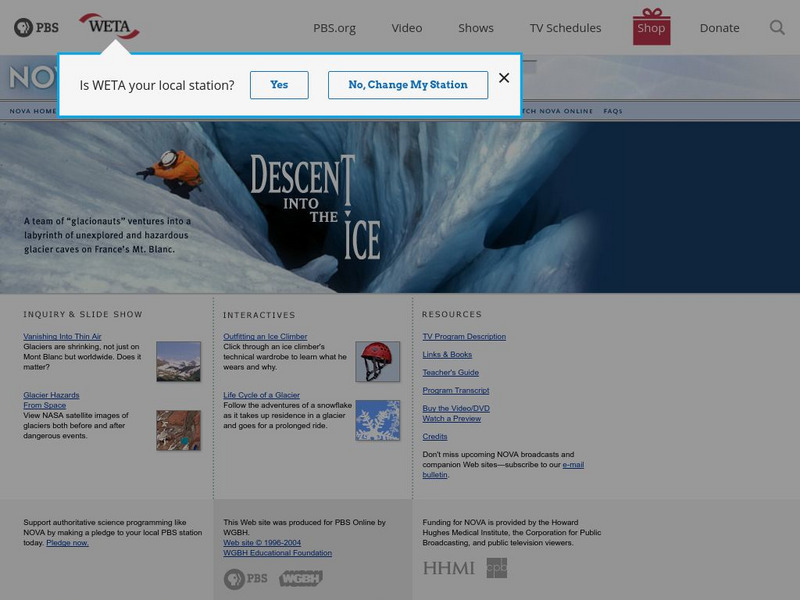
Pbs: Nova: Descent Into the Ice
PBS offers a rare opportunity to explore the glaciers on France's Mt. Blanc in this engaging interactive site. Fun activities for students include following the process a snowflake takes to become a glacier.
PBS
Pbs Learning Media: Helheim Glacier
Why is the study of glaciers important? Glacial ice serves many functions that affect the entire Earth system, including regulating global moisture, temperature, and ocean salinity. Studying glaciers allow us to better understand how...
Science Friday Initiative
Science Friday: Photographer James Balog on Climate Change and 'Chasing Ice'
A new documentary explores how climate change is affecting the world's glaciers.
Bozeman Science
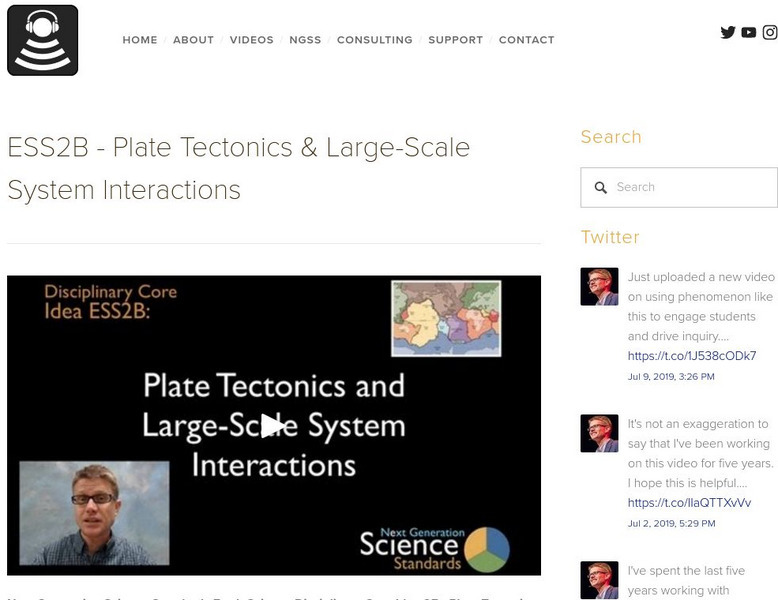
Bozeman Science: Plate Tectonics & Large Scale System Interactions
In this video, Paul Andersen explains how plate tectonics explains the large-scale system interactions on our planet. Large plates float on the mantle and interact to form the major landforms on the planet. Evidence for plate tectonics...

Science Friday Initiative
Science Friday: Antarctic Glaciers Moving to the Sea
Glaciers in a remote part of Antarctica appear to be speeding up their slide towards the sea. We'll talk with a researcher trying to figure out why.