Hi, what do you want to do?






National Science Foundation
National Science Foundation: When Nature Strikes: Earthquakes
John Vidale and his team at the Pacific Northwest Seismic Network are monitoring ground motion across Washington State and Oregon to prepare residents for one of the most powerful natural hazards on the planet--a magnitude 9 "megathrust"...
National Science Foundation
National Science Foundation: Megathrust Earthquakes
Experts warn that an offshore quake powerful enough to discharge a tsunami could hit the U.S. West Coast anytime. QUEST Northwest talks with geologists and seismologists about cutting edge research in earthquake prediction, and what it...
Incorporated Research Institutions for Seismology
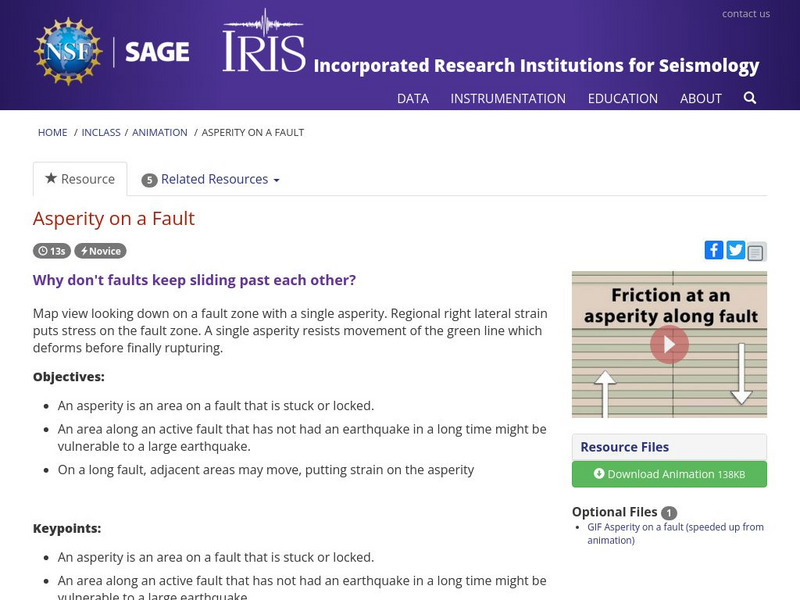
Iris: Asperity on a Fault
Brief animation shows friction at an asperity along a right-lateral fault and explains why faults don't keep sliding past each other. [0:13]

Incorporated Research Institutions for Seismology
Iris: Elastic Rebound on High Friction Strike Slip Fault
Animation shows the buildup of stress along the margin of two stuck plates that are trying to slide past one another deforming rock. [33]
Other
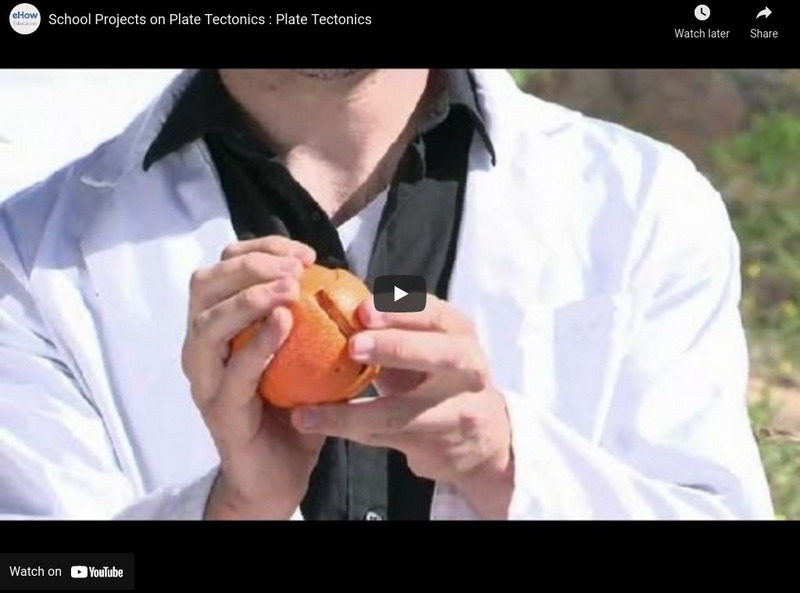
E How Education: School Projects on Plate Tectonics
A science teacher demonstrates a number of simple models that teachers can use, or have students make, when teaching about plate tectonics and earthquakes. [5:38]

Crash Course
Crash Course World Mythology #24: Ragnarok
This video focuses on the Norse Apocolypse, Ragnarok. Ragnarok! It's the end of the world, Norse style. It's got everything you want in an apocalypse. Earthquakes, destruction, armies of the dead, a giant evil wolf, giants with flaming...
Incorporated Research Institutions for Seismology
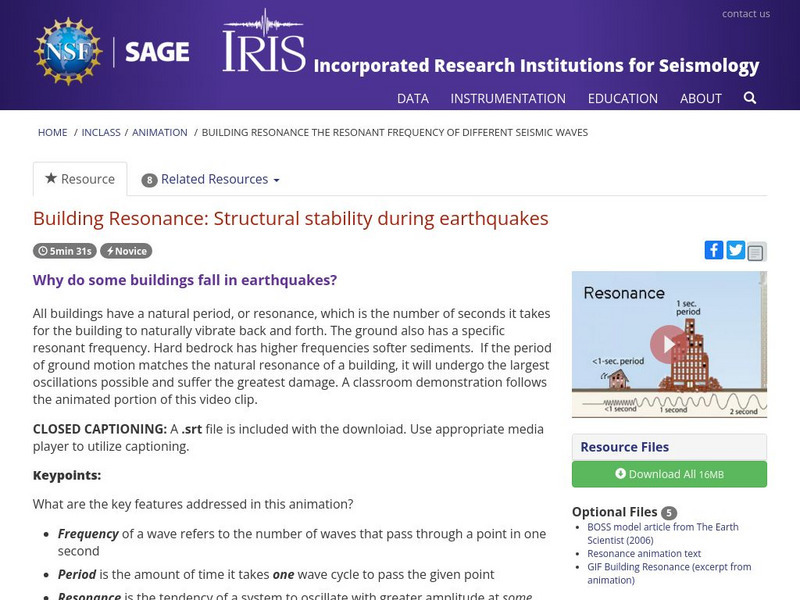
Iris: Building Resonance: The Resonant Frequency of Different Seismic Waves
Why do some buildings fall in earthquakes? Animated video addresses the key points of frequency, period, and resonance. All buildings have a natural, period, or resonance, which is the number of seconds it takes for the building to...

Incorporated Research Institutions for Seismology
Iris: Buildings & Bedrock: Effects of Amplification & Liquefaction
Animation explores how 3 buildings engineered equally on different bedrock will react to an earthquake. [1:25]
Incorporated Research Institutions for Seismology
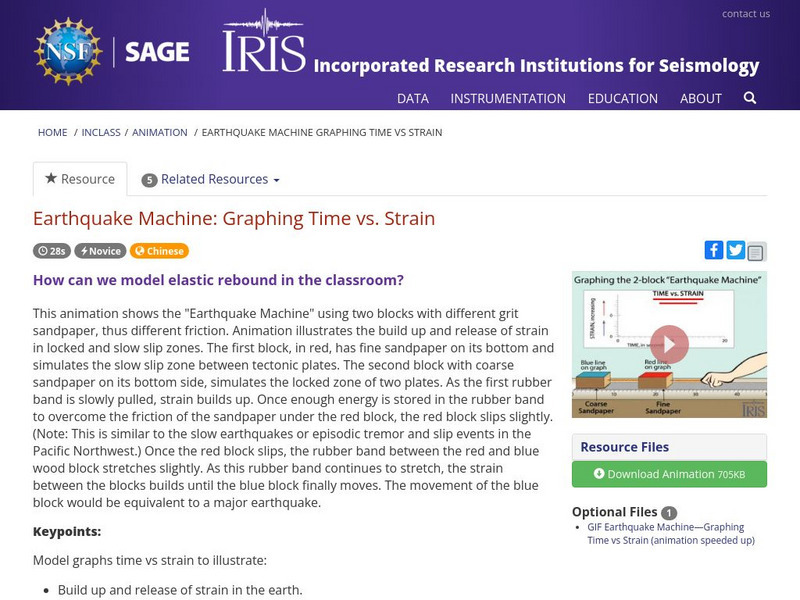
Iris: Earthquake Machine: Graphing Time vs. Strain
Animation illustrates the buildup and release of strain in locked and slow slip zones. [0:28]
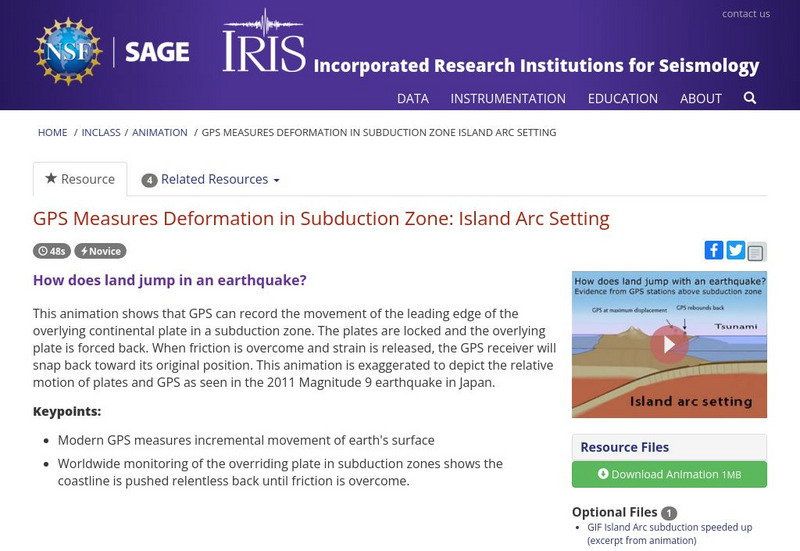
Incorporated Research Institutions for Seismology
Iris: Gps Measures Deformation in Subduction Zone: Island Arc Setting
This animation shows that GPS can record the movement of the leading edge of the overlying continental plate in a subduction zone. [0:48]

Incorporated Research Institutions for Seismology
Iris: Gps Measures Deformation in Subduction Zones: Ocean/continent
Animation shows how land jumps in an earthquake and how GPS can record the movement. [0:49]
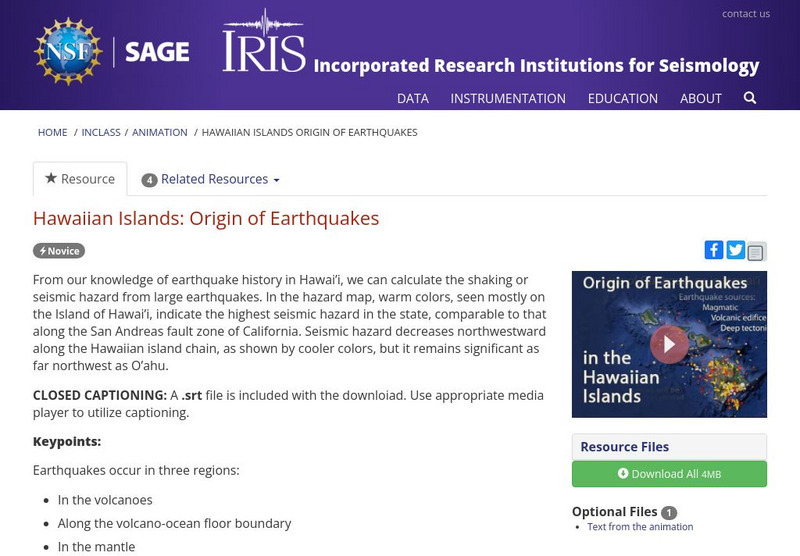
Incorporated Research Institutions for Seismology
Iris: Hawaiian Islands: Origin of Earthquakes
What causes the earthquakes that occur frequently on the Big Island of Hawaii? This animation offers three general sources for the earthquakes. [3:20]
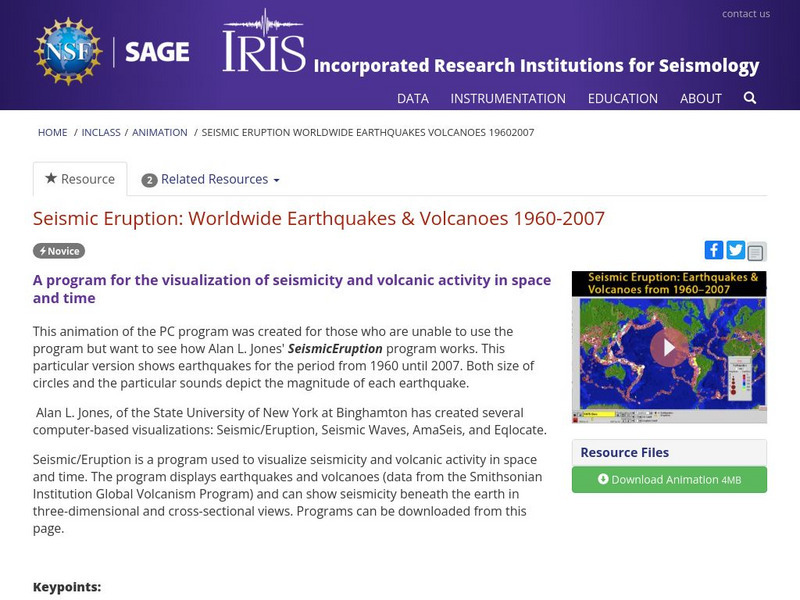
Incorporated Research Institutions for Seismology
Iris: Seismic Eruption: Worldwide Earthquakes & Volcanoes 1960 2007
Utilize this video to visualize seismicity and volcanic activity in space and time. [1:06]

Khan Academy
Khan Academy: Science Bulletins: Mapping the Heat Beneath
As seismic waves from earthquakes pass through the planet, their patterns can reveal hidden dynamics-hotspots, deep-diving rock, melting mantle-in Earth's interior. An array of seismometers that's being installed across the United States...
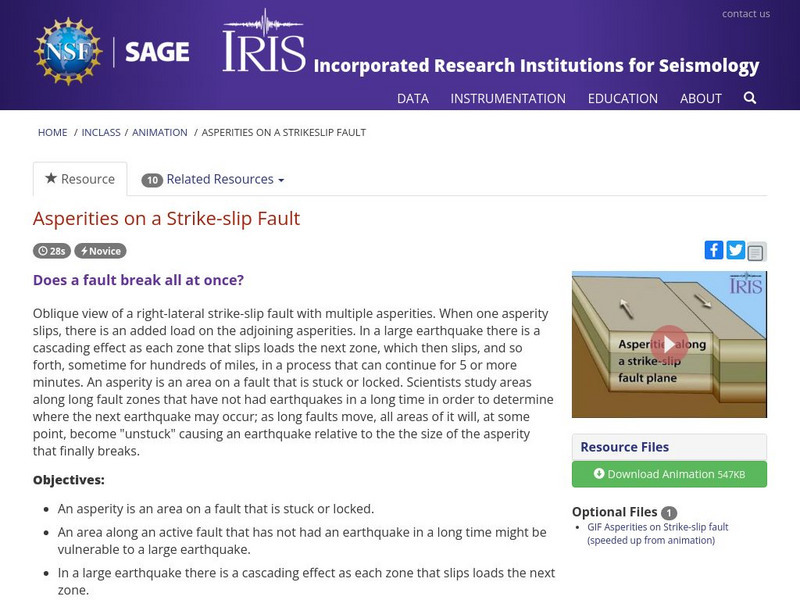
Incorporated Research Institutions for Seismology
Iris: Asperities on a Strike Slip Fault
An asperity is an area on a fault that is stuck or locked. This brief clip illustrates asperities along a strike-slip fault plane. [0:28]
PBS
Pbs Nova: Deadliest Earthquakes
The sad truth is that earthquakes are inevitable, but there are ways to lessen their devastation. Watch this fascinating video on the deadliest earthquakes. Follow a team of US geologists as they try to determine exactly what happened in...
US Geological Survey
U.s. Geological Survey: Earthquakes: Elastic Rebound
This captioned animation describes the elastic rebound effect, which happens as a result of an earthquake.
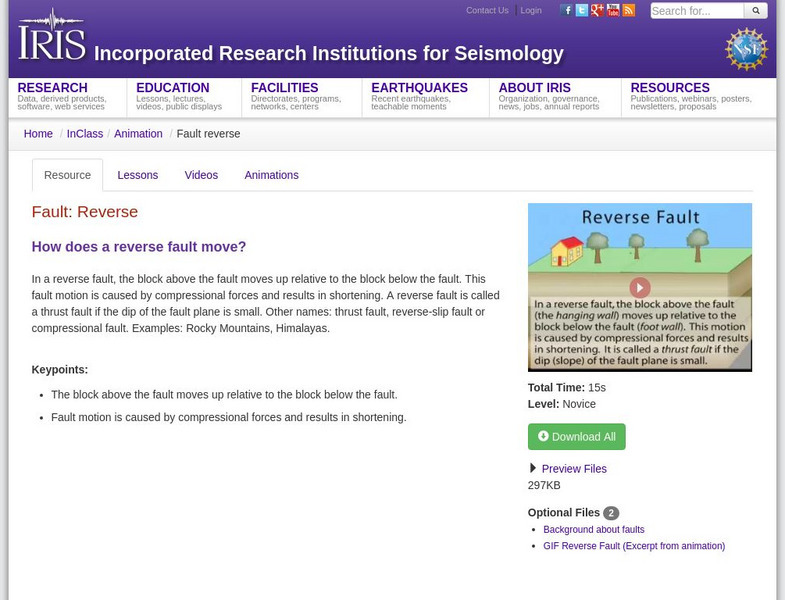
Incorporated Research Institutions for Seismology
Iris: Earthquake Gi Fs
Two animated GIFs of a reverse fault and station seismogram teachers can use for a presentation.
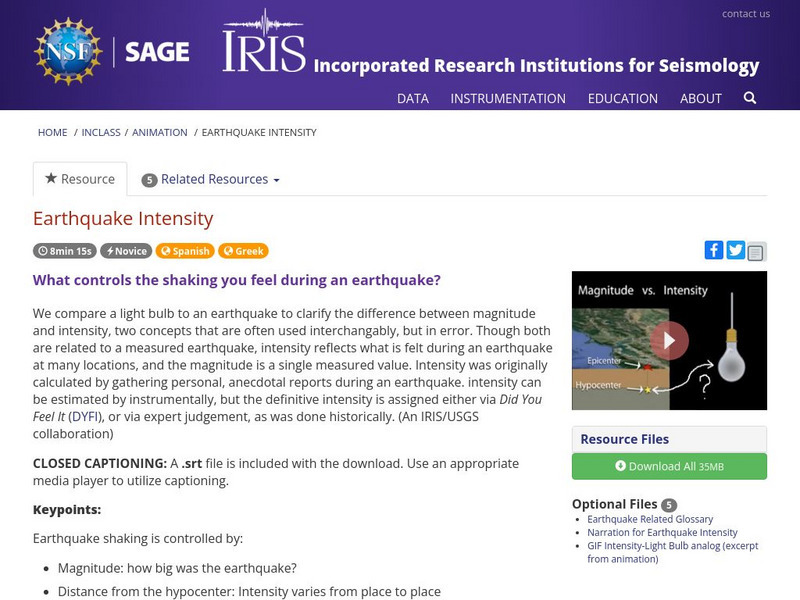
Incorporated Research Institutions for Seismology
Iris: Earthquake Intensity
Understand the three factors that affect earthquake intensity: magnitude, distance from the center, and Local rock and soil conditions. [8:15]

Incorporated Research Institutions for Seismology
Iris: Earthquake Machine 2 Developing Arguments About Earthquake Occurrence
This activity uses the Earthquake Machine, a mechanical model that illustrates the earthquake cycle, as a tool to investigate the behavior of fault systems.
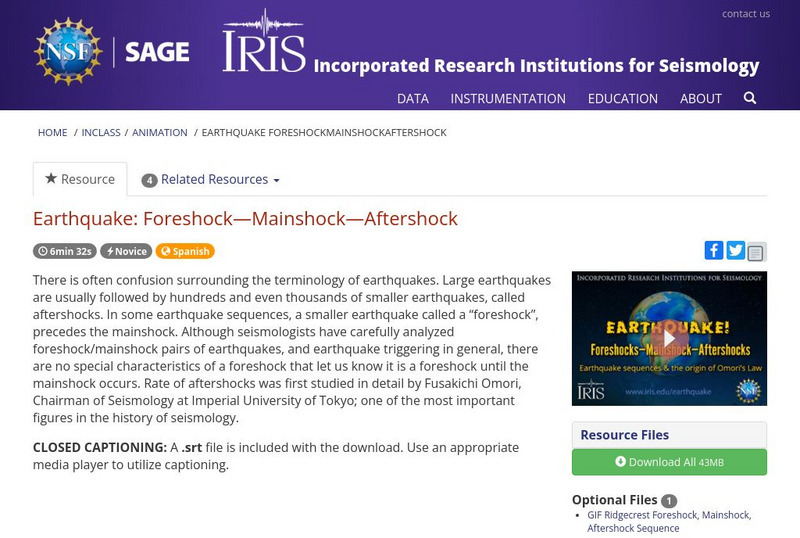
Incorporated Research Institutions for Seismology
Iris: Earthquake: Foreshock Mainshock Aftershock
Learn how foreshocks and aftershocks are related to the main shocks of earthquakes. [6:32]
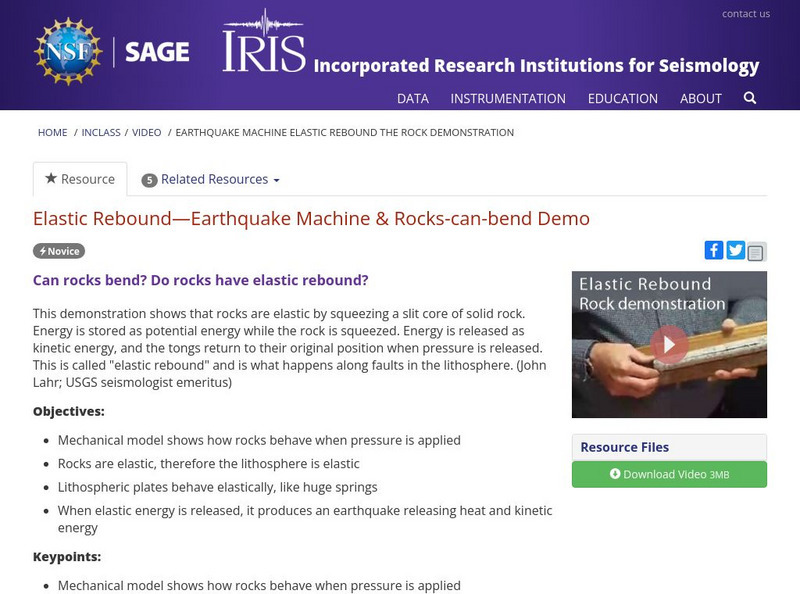
Incorporated Research Institutions for Seismology
Iris: Earthquake Machine: Elastic Rebound & the Rock Demonstration
This demonstration shows that rocks are elastic by squeezing a slit core of solid rock. Energy is stored as potential energy while the rock is squeezed. [1:22]
Incorporated Research Institutions for Seismology
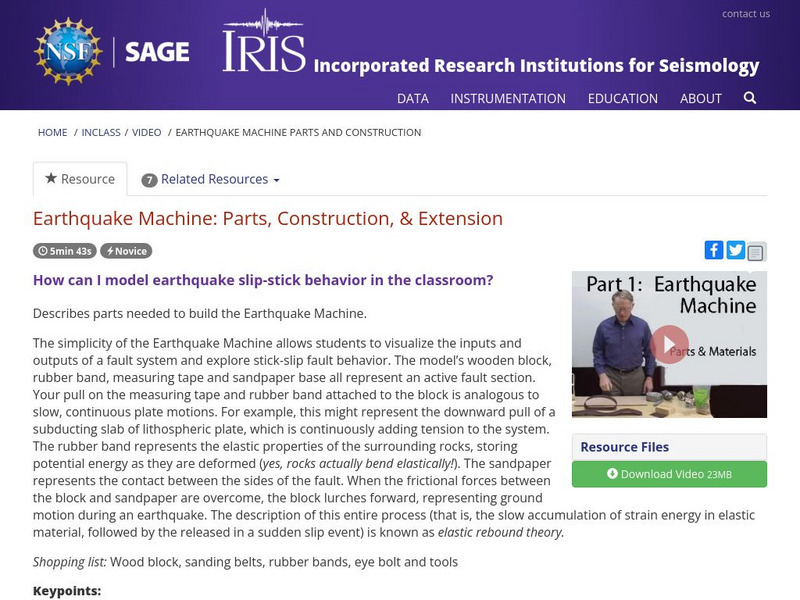
Iris: Earthquake Machine: Parts, Construction, & Extension
See a demonstration of an earthquake slip-stick behavior in the classroom. [6:22]
Incorporated Research Institutions for Seismology
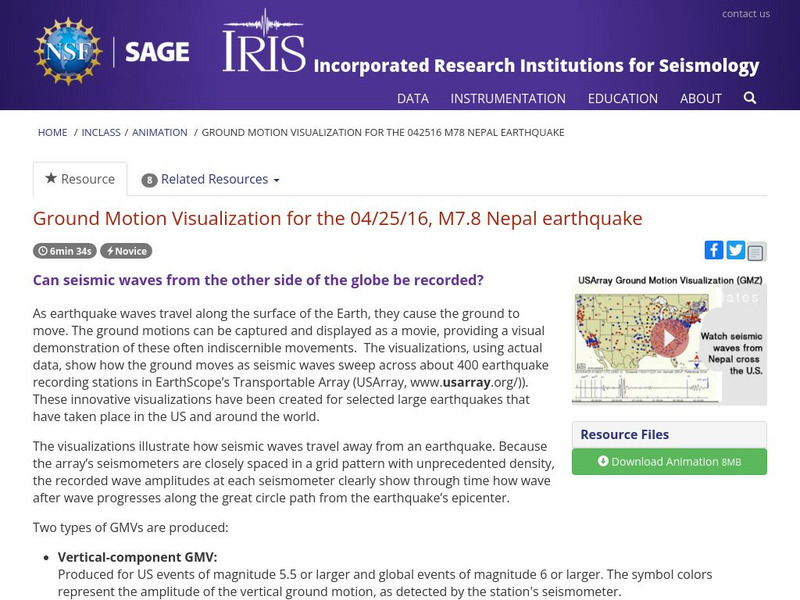
Iris: Ground Motion Visualization for the 04/25/16, M7.8 Nepal Earthquake
These visualizations, using actual data, show how the ground moves as seismic waves sweep across about 400 earthquake recording stations in EarthScope's Transportable Array. [6:34]