Hi, what do you want to do?





University of Groningen
American History: Outlines: War and Neutral Rights
This resource presents a brief discussion of U.S. neutrality early in World War I and of the events which brought the country closer to war.

Clackamas Community College
Clackamas Community College: Neutralization
Explains neutralization, and includes some sample problems about predicting products of such reactions.
OpenStax
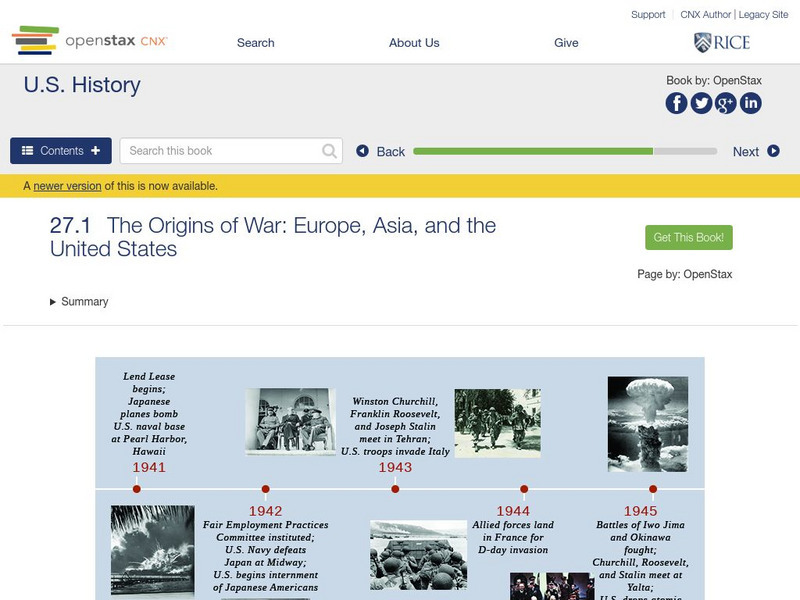
Open Stax: World War Ii 1941 1945: Origins of War: Europe, Asia and United States
Examines the conditions that fostered the rise of Fascism and Nazism, the events during the lead-up to the outbreak of war, and what Roosevelt did to help affected nations yet still keep the United States neutral.
OpenStax
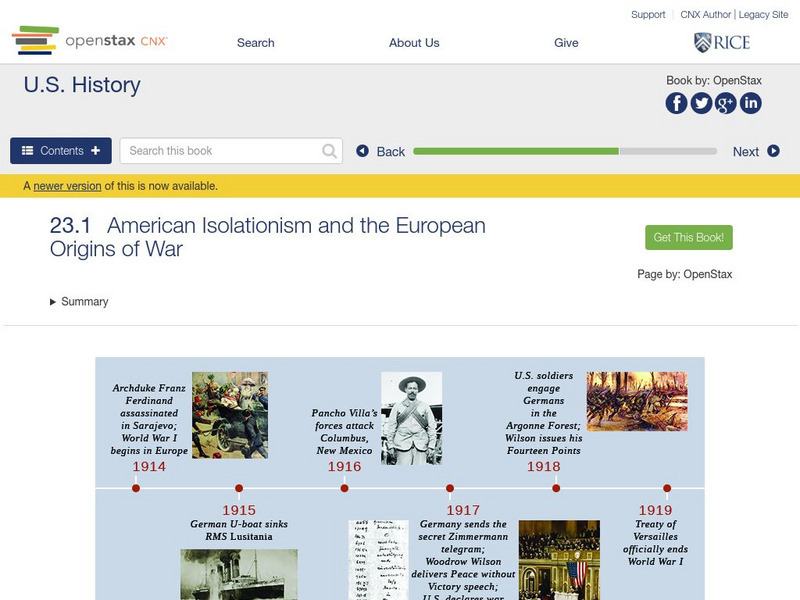
Open Stax: Great War 1914 1919: American Isolationism and European Origins of War
The foreign policy of Woodrow Wilson is explained, and how he tried to keep America neutral at the start of World War I yet intervened in international affairs in the Western Hemisphere. The reasons America declared war on Germany in...

Khan Academy
Khan Academy: Ap Us History: 1890 1945: The United States in World War I
Discusses what triggered World War I, why the United States joined the war, and the impact the war had on life in the United States. Includes questions for students at end.
ibiblio
Ibiblio: Ww Ii Resources: Shoot on Sight Speech Regarding Attack on Uss Greer
German U-boat attacks made it increasingly difficult for the United States to maintain its neutrality in World War II. Read Franklin D. Roosevelt's speech given on September 11, 1949, in response to the German attack on the US destroyer,...
Digital History
Digital History: Isolationists, Internationalists and Lend Lease [Pdf]
Read about the German incursion into France and the Low Countries and the bombing of Great Britain which caused much discussion in the United States. Should the US stay out of affairs in Europe, or intervene to help their long-time ally,...
Independence Hall Association
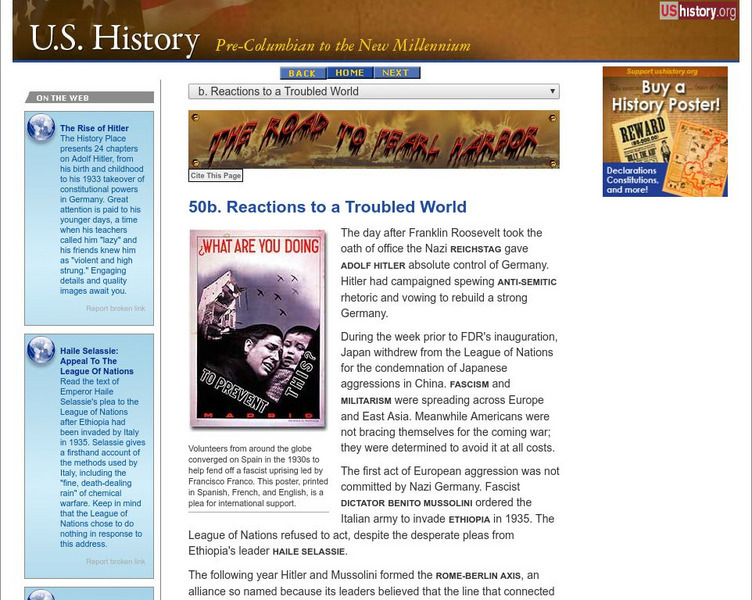
U.s. History: Reactions to a Troubled World
Read about the rising militarism and fascism in Europe and Asia as dictators expanded their territories. See how the United States reacted with its series of three neutrality acts.
Independence Hall Association
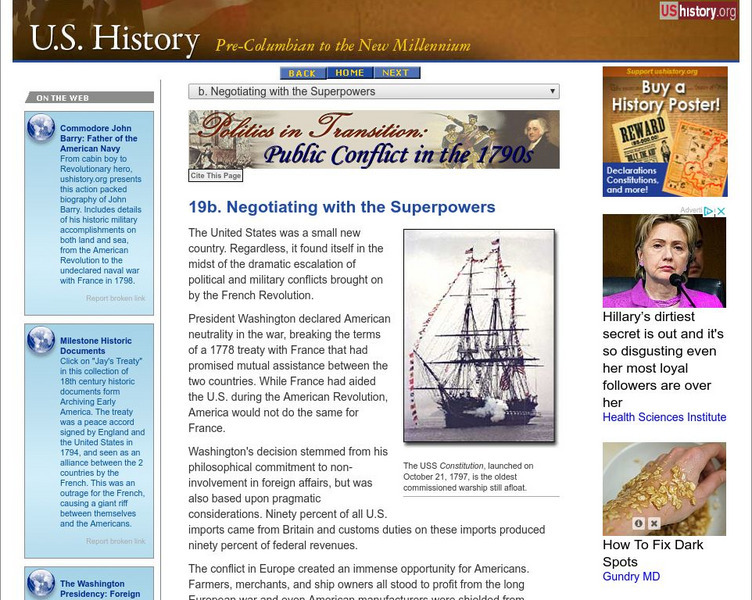
U.s. History: Negotiating With the Superpowers
Read about the problems President George Washington had with foreign affairs. Both France and Great Britain ignored American sovereignty and claims of neutrality. Read about Great Britain's disregard of the Treaty of Paris which ended...

Khan Academy
Khan Academy: Fdr and World War Ii
Discusses how Franklin D. Roosevelt guided the United States through World War II and laid the groundwork for Harry Truman to assume the role after his death.
PublicBookshelf Corporation
Our Country: Citizen Genet
From an 1877 book originally titled "Household History for All Readers," this section discusses Citizen Genet. Genet was the French ambassador who tried to get the US to break its neutrality during Washington's administration.
University of Minnesota
Univerity of Minnesota: Global Rem: Border Control & Technology
This resource uses articles, images, and videos that describe the use of sophisticated technologies to control migration at the border between the United States and Mexico. The goal is to encourage students to understand how technology...
Independence Hall Association
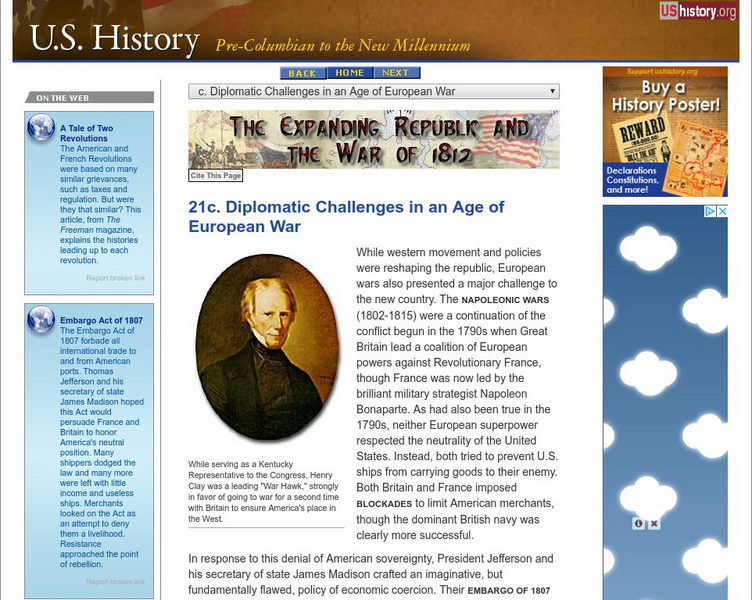
U.s. History: Diplomatic Challenges in an Age of European War
Both the British and French challenged American sovereignty and neutrality on the high seas. Read about the solution favored by Thomas Jefferson, but despised by the American shippers. See why this a cause of the War of 1812, along with...
Independence Hall Association
U.s. History: America in the First World War
A brief overview of the United States in the World War I era. Read about initial American neutrality, American entrance into the war, and the American homefront.
Independence Hall Association
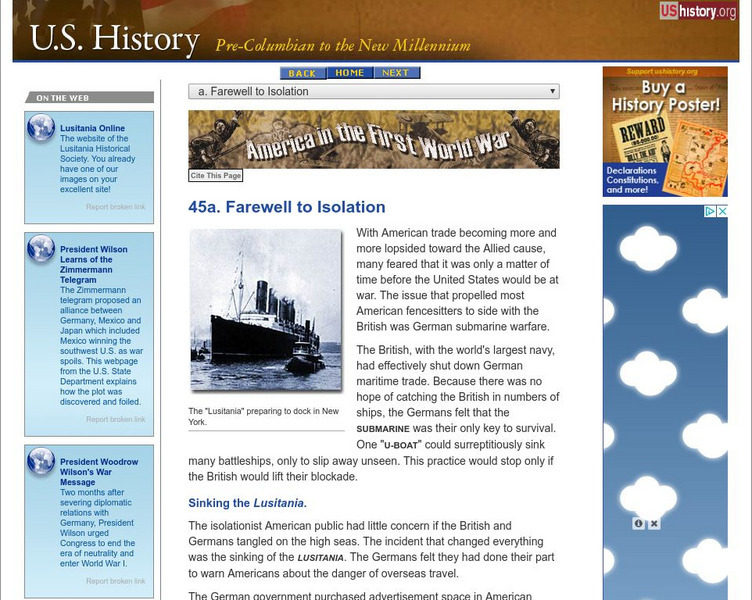
U.s. History: Farewell to Isolation
President Wilson's claim, "he kept us out of war," did not last. Read about the increasing number of reasons for American to declare war against Germany. See why war was finally declared in April, 1917.

Ducksters
Ducksters: World War I for Kids: United States in Wwi
Kids learn about the United States in World War I. The U.S. began neutral but was pulled into the war by the Germans. The influx of fresh troops and resources turned the tide of the war in favor of the Allies.
Siteseen
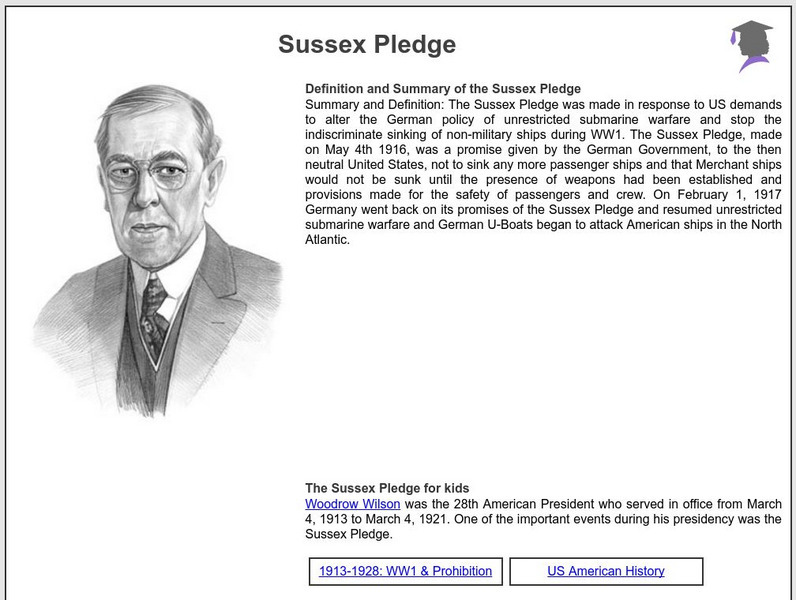
Siteseen: American Historama: Sussex Pledge
Comprehensive overview provides detailed facts and information on the Sussex Pledge, a promise to the US to alter the German policy of unrestricted submarine warfare in WWI.
Other
Basin: General Information on Alkalinity
This is a good informational site about Alkalinity. It gives a good explanation of it and some examples.
Stanford University
Sheg: Document Based History: Reading Like a Historian: u.s. Entry Into Wwi
[Free Registration/Login Required] In this historical inquiry lesson, students address the question, "What changed between 1914 and 1917 that caused the U.S. to enter WWI?" to corroborate a textbook account with two documents: a speech...
Raleigh Charter High School
Mrs. Newmark's Page: March to War
Take this quiz to assess your knowledge on World War II history.
Independence Hall Association
U.s. History: The Arsenal of Democracy
Although Americans remained isolationist in their thinking, President Roosevelt understood that the European allies needed help against the Germans. Read about the incremental ways America became involved in World War II in Europe...
Independence Hall Association
U.s. History: 1930s Isolationism
Read about the ways the American government and people looked inward during the 1930s, isolating themselves from actions taking place in Europe and Asia.
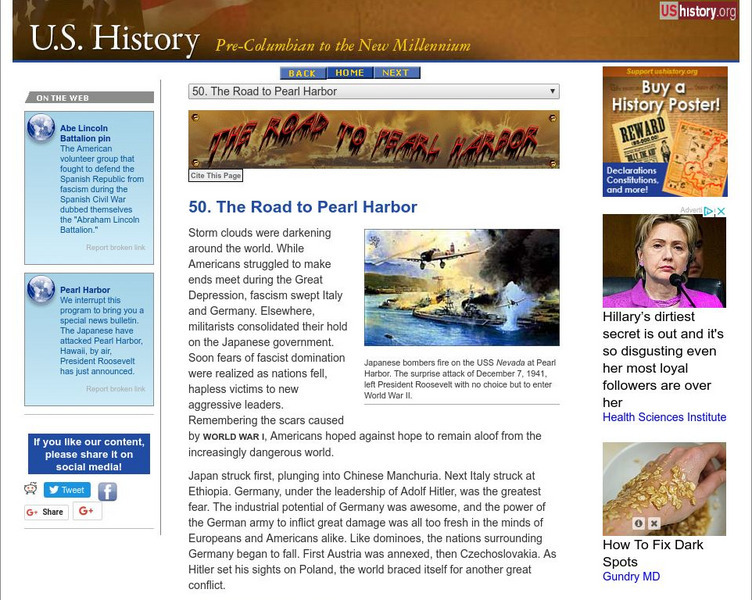
Independence Hall Association
U.s. History: The Road to Pearl Harbor
A brief overview of the decade prior to the American entrance into World War II. Read about the rise in militarism in both Europe and Japan.
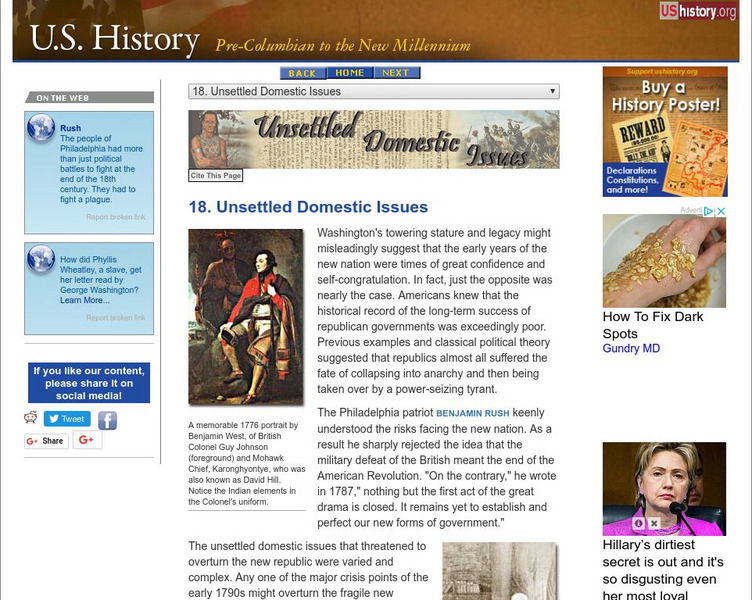
Independence Hall Association
U.s. History: Unsettled Domestic Issues
The new United States government faced many threats to its success. Read this overview of the possible problems.