Hi, what do you want to do?





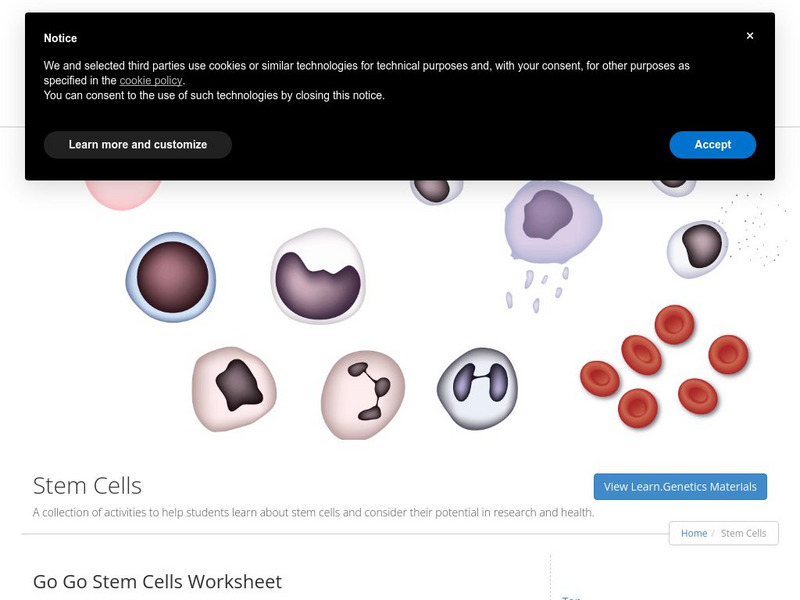
University of Utah
University of Utah: Genetic Science Learning Center: Which Type of Stem Cell Would You Use?
A teacher guide and student handout for a lesson where students must weigh the advantages and disadvantages of using different types of stem cells to treat diabetes, Parkinson's Disease, heart disease, and lupus. They also compare gene...

PBS
Pbs Teachers:stem Cell Research Policy Lesson Plan: Create an Advocacy Brochure
Research the science and controversy around stem cell research and evaluate, defend or attack President Bush's ruling on federal spending regarding this issue. Create brochures to display knowledge and point of view.
TeachEngineering
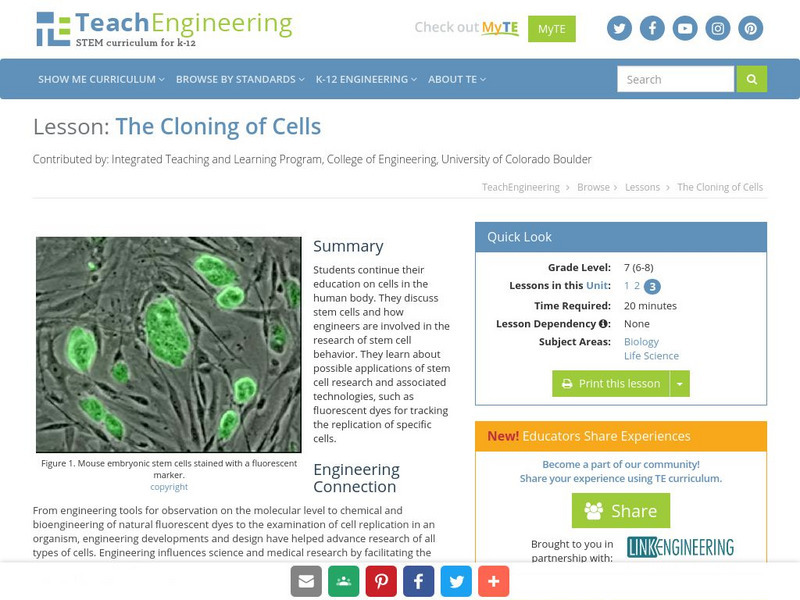
Teach Engineering: The Cloning of Cells
Middle schoolers continue their education on cells in the human body. They discuss stem cells and how engineers are involved in the research of stem cell behavior. They learn about possible applications of stem cell research and...
TeachEngineering
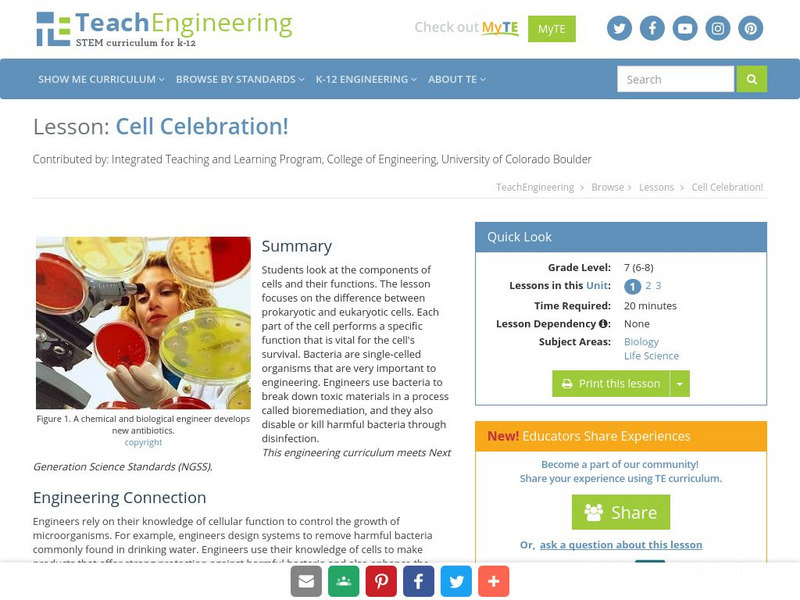
Teach Engineering: Cell Celebration!
Students look at the components of cells and their functions. The instructional activity focuses on the difference between prokaryotic and eukaryotic cells. Each part of the cell performs a specific function that is vital for the cell's...
Other
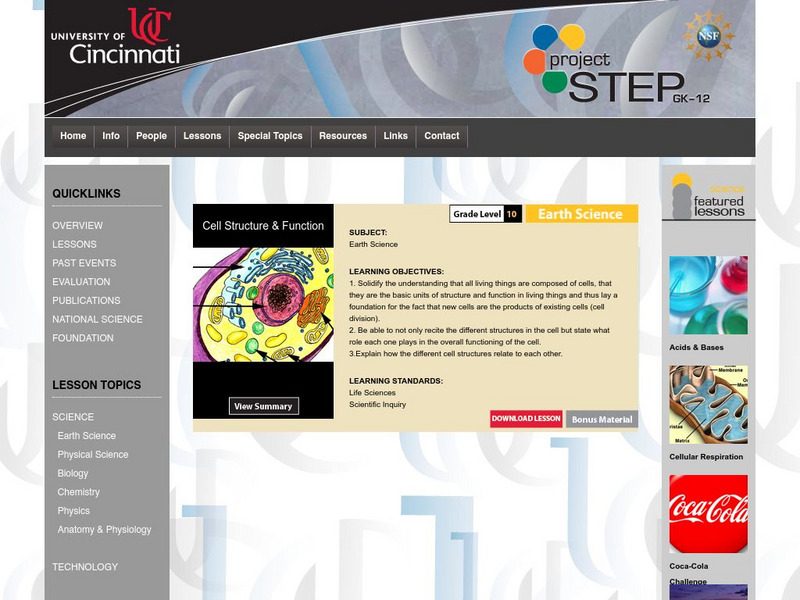
University of Cincinnati: Project Step: Cell Structure and Function
Engaging, interactive instructional activity focusing on cells being the basic units of structure and function of all living things. Learners will be able to explain the different roles of each structure and how they relate to each other.
TeachEngineering
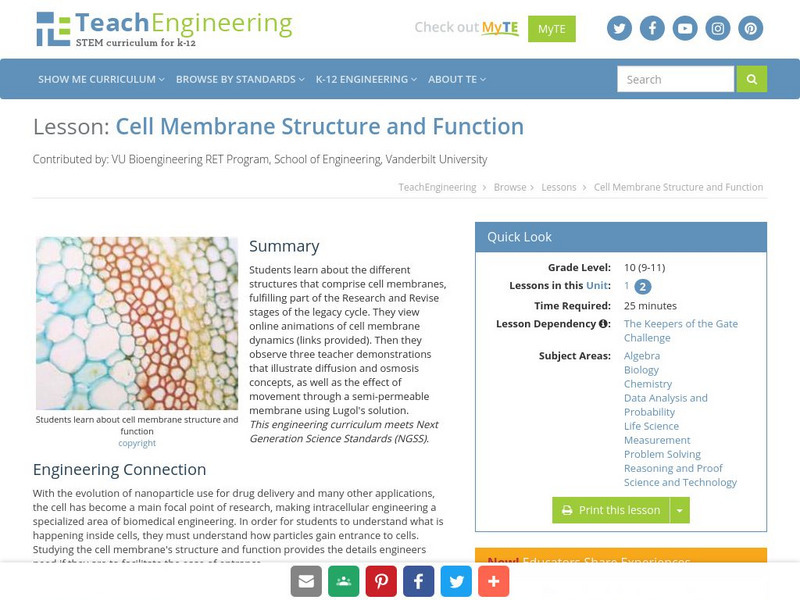
Teach Engineering: Cell Membrane Structure and Function
Students learn about the different structures that comprise cell membranes, fulfilling part of the Research and Revise stages of the legacy cycle. Students view online animations of cell membrane dynamics (links provided). Then they...
PBS
Pbs Teachers: Scientific American: Never Say Die: How to Make a Nose
Investigate breakthroughs in stem cell research, and explore the structure and function of a DNA molecule. Create a model of a DNA from tagboard.
Other
Ohio Department of Education: Cell Division and Differentiation
In this lesson, students use hands-on activities and journaling to learn about the process of mitosis, meiosis and cell differentiation. Hands-on activities include modeling of the mitosis and meiosis processes with model building and...

PBS
Pbs Teachers: Scientific American: Body Building: Encouraging Cell Growth
Investigate medical research in producing (culturing) artificial organs, such as livers, on silicon chips. Test how the surface coating of a substrate affects the success of a biofilm.
Other
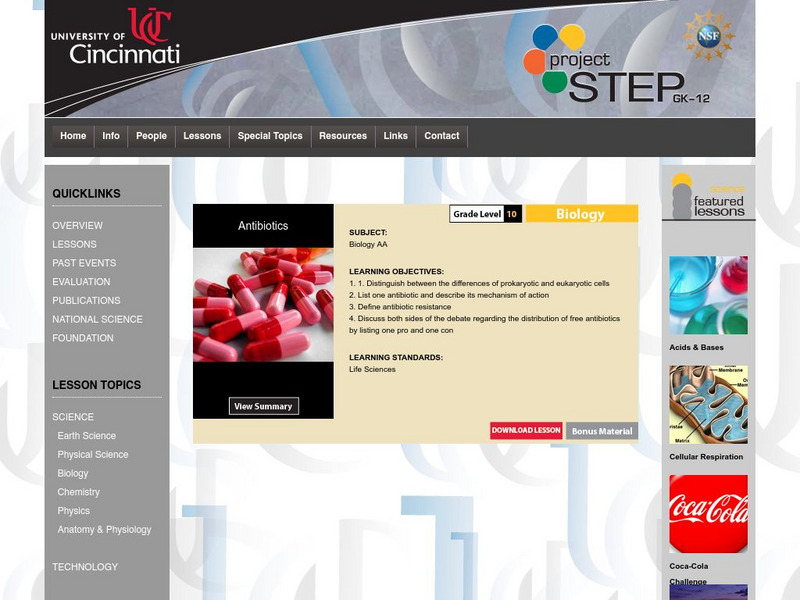
University of Cincinnati: Project Step: Antibiotics
STEM biology instructional activity where by designing their own antibiotics, students will gain an understanding of how the differences between prokaryotic cells and eukaryotic cells have played a role in their own health. They will...
Other
The Plant Cell: Teaching Tools in Plant Biology: Why Study Plants?
Plants are essential for all life and development. Teach your young scholars about this incredible lifeforce with this teaching guide, lecture notes, and PowerPoint presentation. [PDF]
TeachEngineering
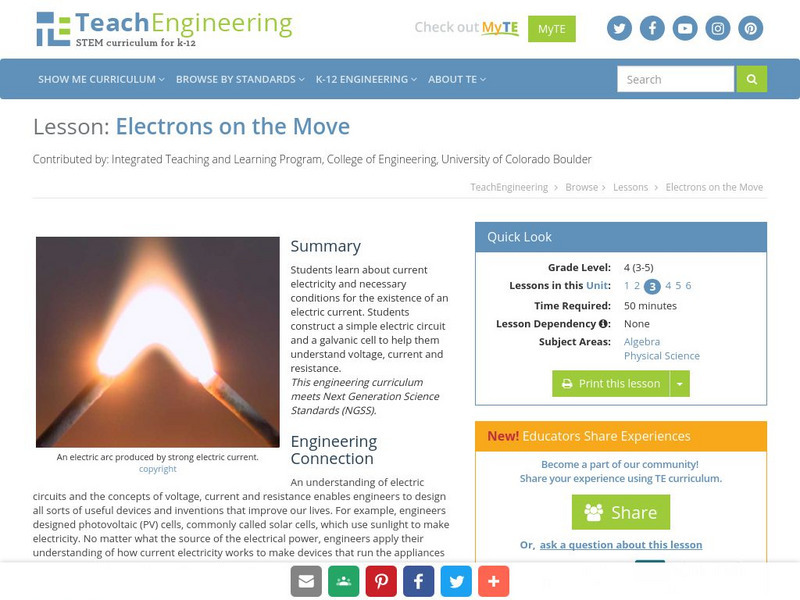
Teach Engineering: Electrons on the Move
Learners learn about current electricity and necessary conditions for the existence of an electric current. Students construct a simple electric circuit and a galvanic cell to help them understand voltage, current and resistance.
Science Buddies
Science Buddies: Explore Enzyme Activity
In this science activity, you will investigate the enzyme called catalase to find out how it helps to protect your body from cell damage.
TeachEngineering
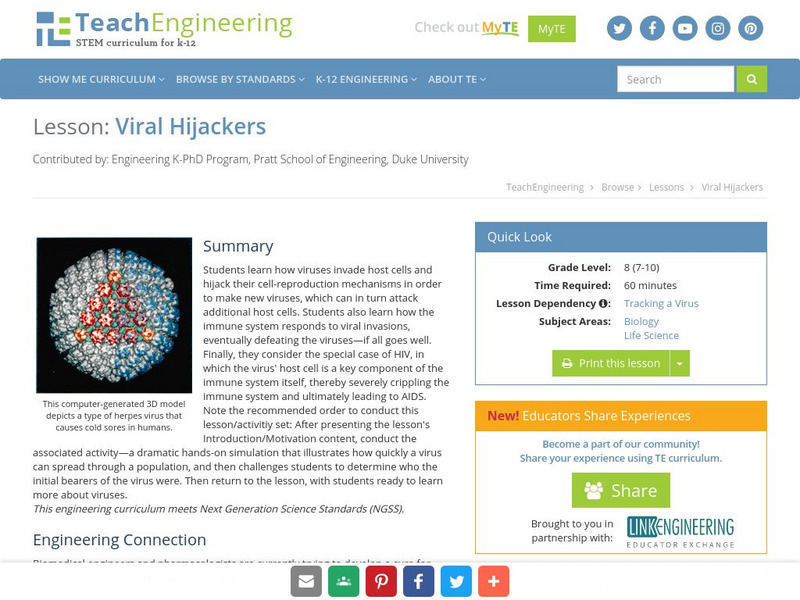
Teach Engineering: Viral Hijackers
Students learn how viruses invade host cells and hijack the hosts' cell-reproduction mechanisms in order to make new viruses, which can in turn attack additional host cells. Students also learn how the immune system responds to a viral...
TeachEngineering
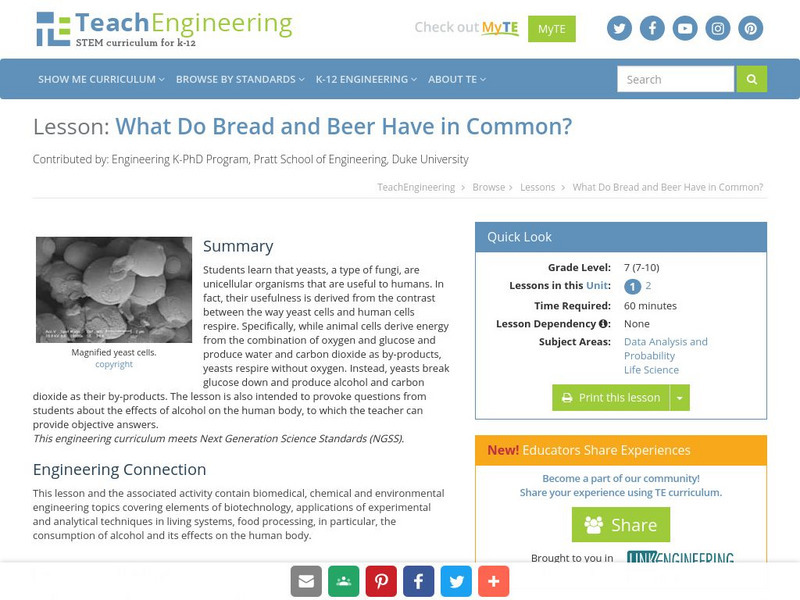
Teach Engineering: What Do Bread and Beer Have in Common?
Students are presented with information that will allow them to recognize that yeasts are unicellular organisms that are useful to humans. In fact, their usefulness is derived from the contrast between the way yeast cells and human cells...

TeachEngineering
Teach Engineering: What's Dominant?
In a class discussion format, the teacher presents background information about basic human genetics. The number of chromosomes in both body cells and egg and sperm cells is covered, as well as the concept of dominant and recessive...
TeachEngineering
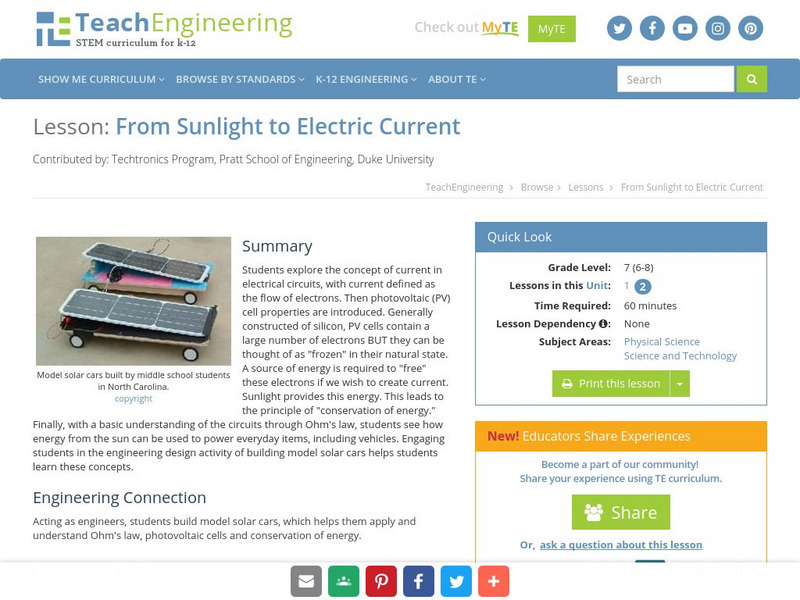
Teach Engineering: From Sunlight to Electric Current
The lesson will first explore the concept of current in electrical circuits. Current will be defined as the flow of electrons. Photovoltaic (PV) cell properties will then be introduced. This will lead to the principle of "Conservation of...

TeachEngineering
Teach Engineering: Photosynthesis Life's Primary Energy Source
This lesson covers the process of photosynthesis and the related plant cell functions of transpiration and cellular respiration. Students will learn how engineers can use the natural process of photosynthesis as an exemplary model of a...
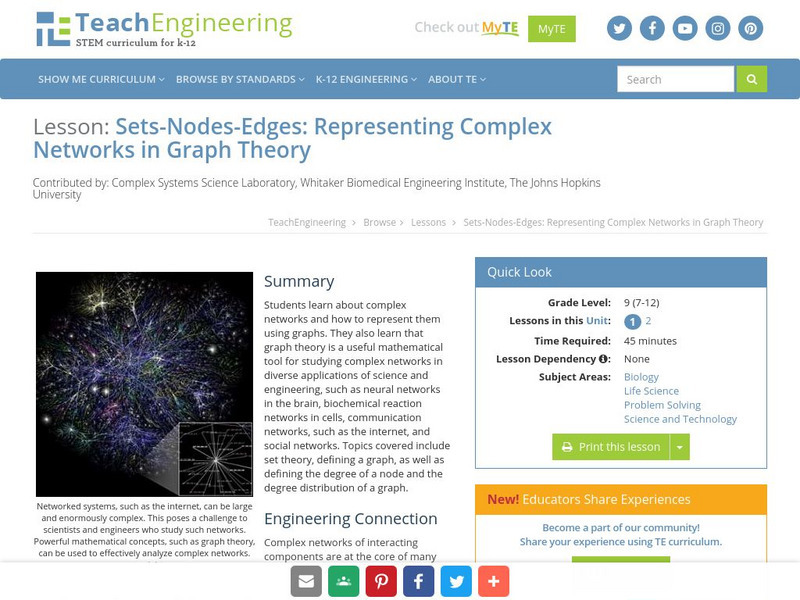
TeachEngineering
Teach Engineering: Complex Networks and Graphs
Students learn about complex networks and how to represent them using graphs. They also learn that graph theory is a useful mathematical tool for studying complex networks in diverse applications of science and engineering, such as...
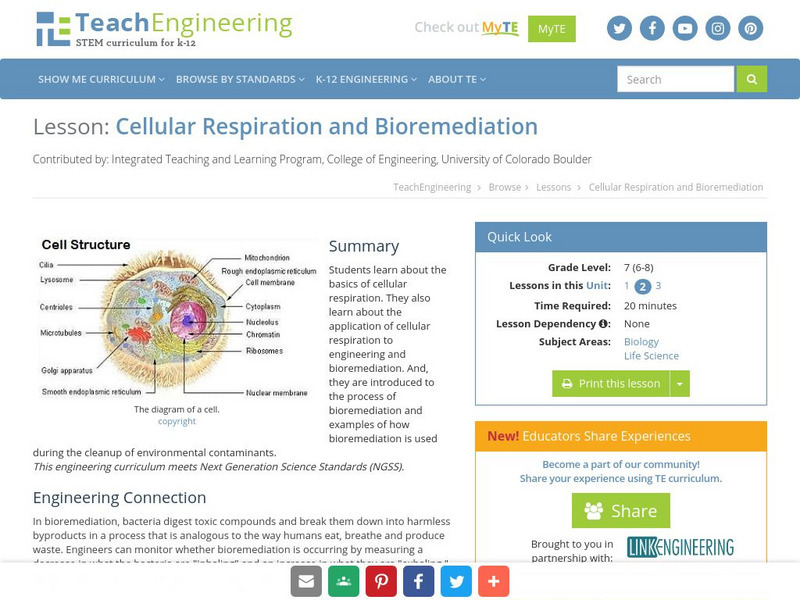
TeachEngineering
Teach Engineering: Cellular Respiration and Bioremediation
Students learn about the basics of cellular respiration. They also learn about the application of cellular respiration to engineering and bioremediation. And, they are introduced to the process of bioremediation and examples of how...
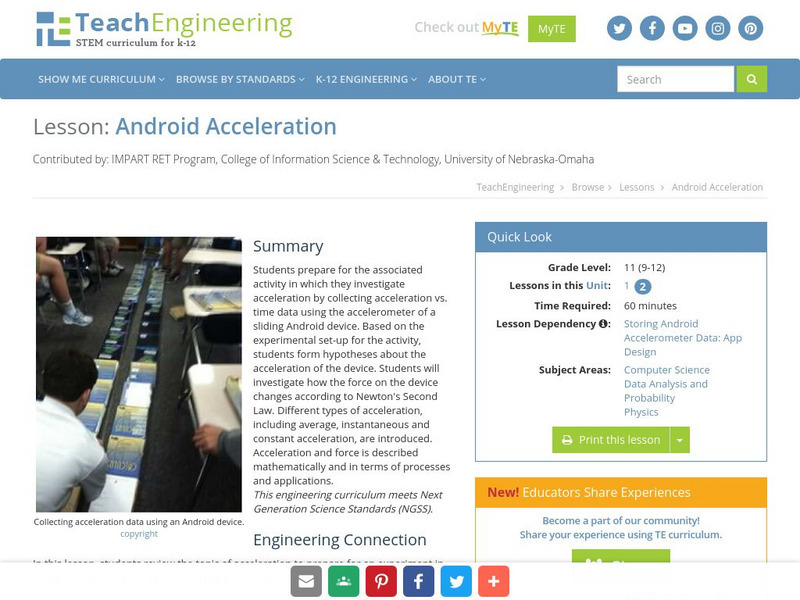
TeachEngineering
Teach Engineering: Android Acceleration
Students prepare for the associated activity in which they investigate acceleration by collecting acceleration vs. time data using the accelerometer of a sliding Android device. Based on the experimental set-up for the activity, students...

TeachEngineering
Teach Engineering: The Keepers of the Gate Challenge
Students are presented with a real-life problem as a challenge to investigate, research and solve. Specifically, they are asked to investigate why salt water helps a sore throat, and how engineers apply this understanding to solve other...
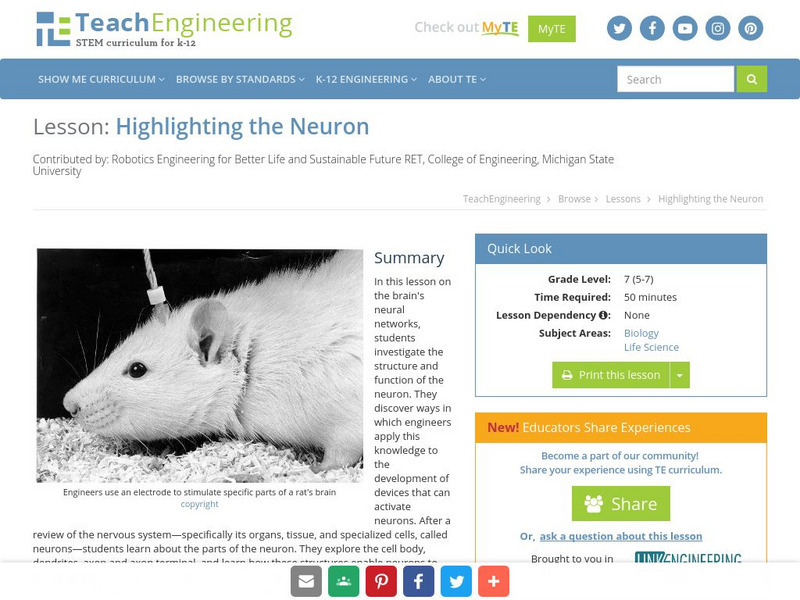
TeachEngineering
Teach Engineering: Highlighting the Neuron
In this lesson on the brain's neural networks, students investigate the structure and function of the neuron. They discover ways in which engineers apply this knowledge to the development of devices that can activate neurons. Includes...
TeachEngineering
Teach Engineering: Digestive System
The digestive system is amazing: it takes the foods we eat and breaks them into smaller components that our body can use for energy, cell repair and growth. This instructional activity introduces students to the main parts of the...
Other popular searches
- Cell Biology Stem Cells
- Human Stem Cells
- Bioethics of Stem Cells
- Ethical Issues Stem Cells
- Stem Cells Genetics
- Embryonic Stem Cells
- Debates Stem Cells
- Benefits of Stem Cells
- Stem Cells Lesson Plans
- Animal Plant Cells Stem
- Stem Cells for Plannet
- Stem Cells for Plan Net