Hi, what do you want to do?






PBS
Pbs: Kid Vid: Dividing Fractions
Compare a division problem with whole numbers to a similar problem about dividing fractions in this interactive from KET. Students watch a video of a peer talking about a fraction problem that involves equal groups, with the number of...
PBS
Pbs: Modeling Fraction Division Using Comparison, Group Number Unknown
This animated video illustrates a visual model for solving a word problem involving the division of fractions. The problem asks students to use fractions to compare the spring weight of a hedgehog with its weight just before hibernation....
Math Slice
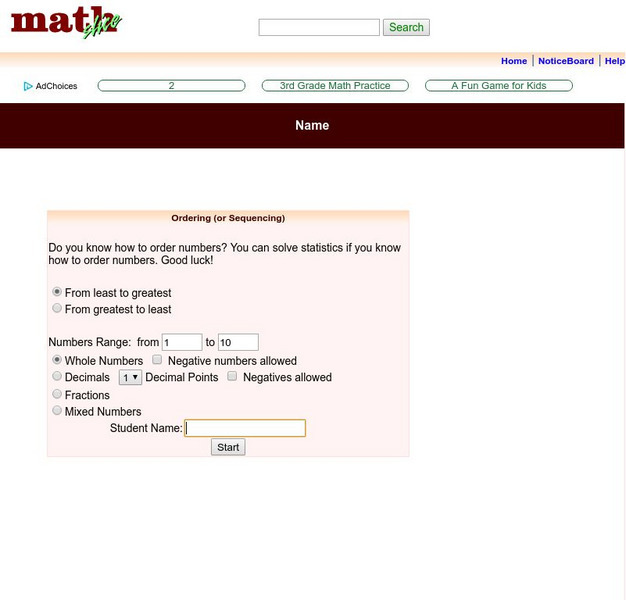
Math Slice: Ordering Game
Sequencing skills are the focus of this interactive game. You must be able to put fractions, decimals, whole numbers, and negative numbers in correct order to win and make the train move down the tracks. Immediate feedback given to...
University of Cambridge
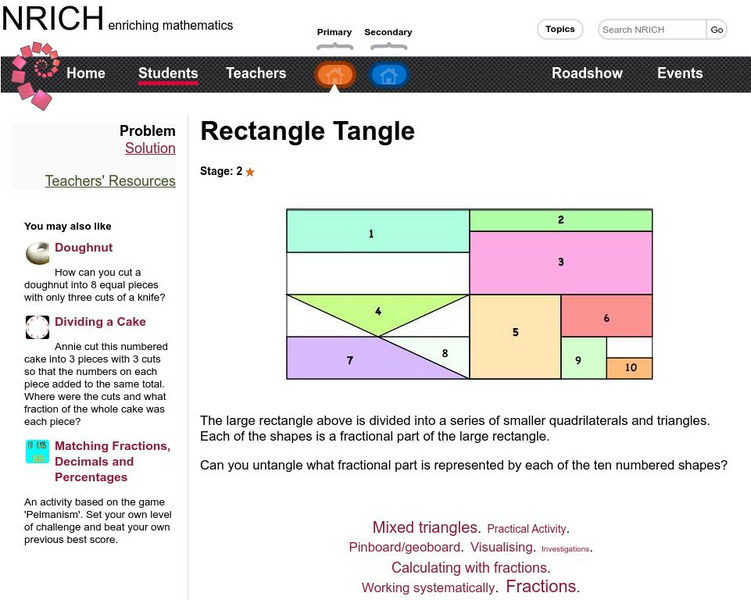
University of Cambridge: Nrich: Rectangle Tangle
On this one page website sharpen your logic and fractional part skills while working on this challenge. The solution is available to double check your solution.
University of Cambridge
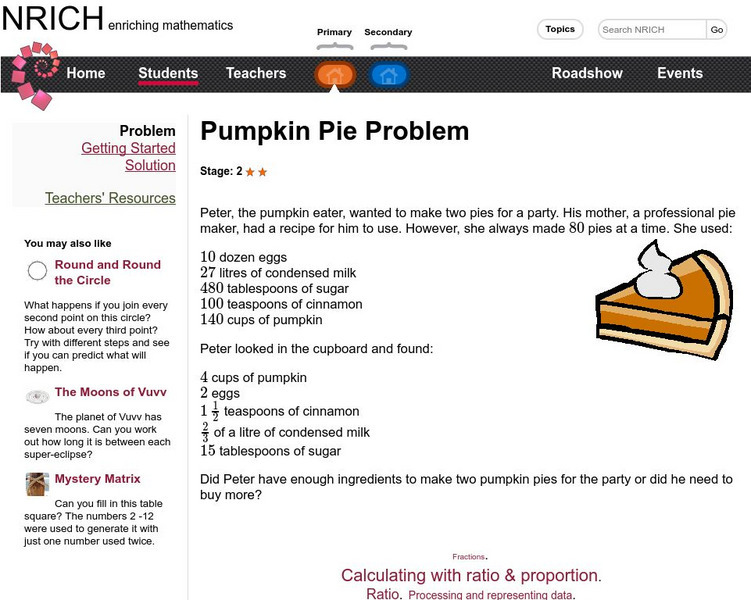
University of Cambridge: Nrich: Pumpkin Pie Problem
On this one page website sharpen your logic, graphing and pattern recognition skills while working on this challenge. The solution is available to double check your solution.
Khan Academy
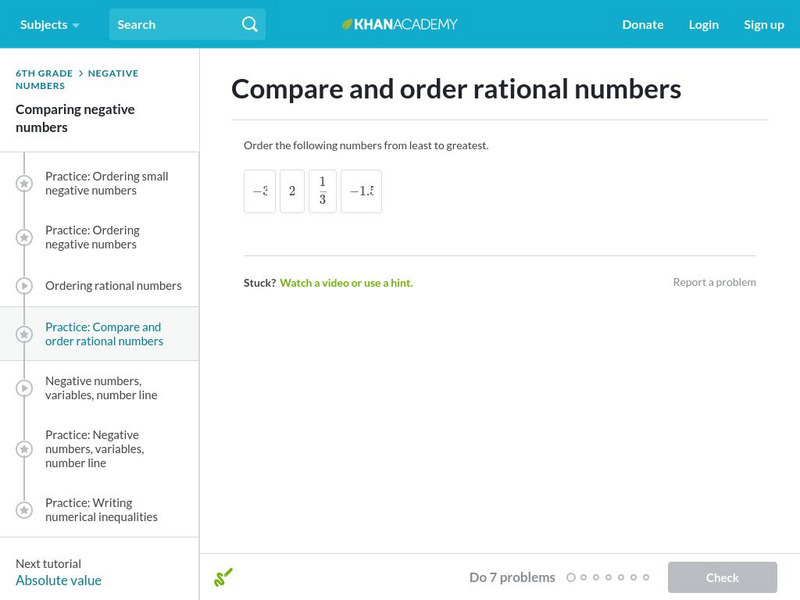
Khan Academy: Ordering Rational Numbers
Practice putting positive and negative fractions and decimals in order. For example, -12/4, -2.5, and 3.25. Students receive immediate feedback and have the opportunity to try questions repeatedly, watch a video or receive hints.

NumberNut
Number Nut: Counting Coins With Values Under One Dollar
Choose the correct group of coins whose sum is the amount shown. Four groups are shown per questions. There are ten random questions.