Hi, what do you want to do?





University of Kansas Medical Center
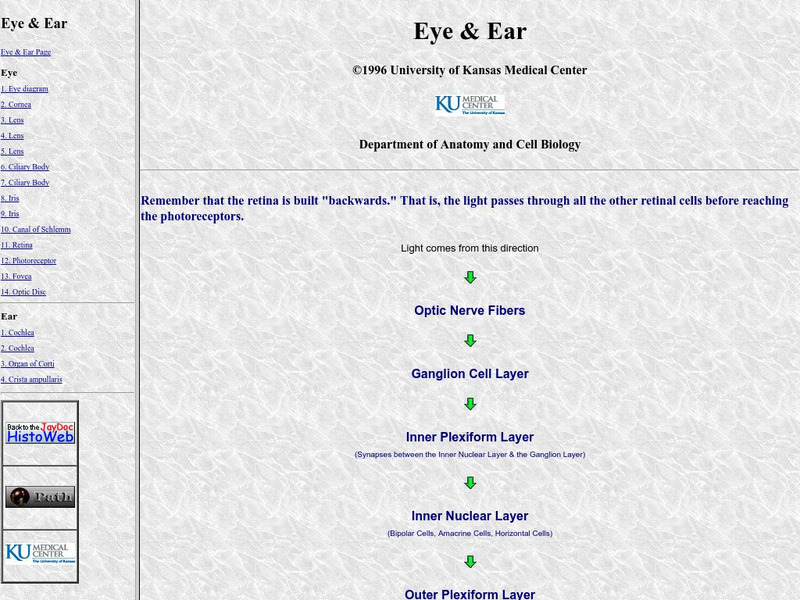
University of Kansas Medical Center: Eye & Ear
Understand the structure and function of the eye and ear cells by examining these microscopic tissue samples.
PBS
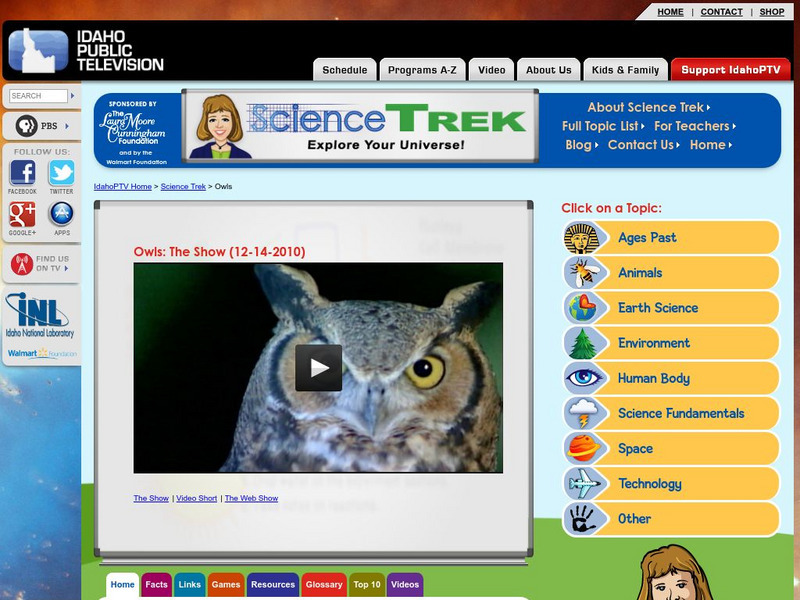
Idaho Public Tv: Owl Facts
Get to know all about the owl by clicking on any of the topics in the menu bar! Includes myths and legends, night life, diet, eyes and ears, reproduction, and a specific focus on the owls native to Idaho. [Requires Windows Media Player.]

PBS
Pbs Learning Media: Some Frequently Confused Words
Some words in English can look and sound similar, but have entirely different meanings. Keep an eye and ear out for them; beware of commonly confused words. [0:40]

Other
Life Extension: Macular Degeneration (Age Related)
This resource gives an overview of age-related Macular Degeneration. Includes a list of Nutritional Recommendations and Vitamins.

Smithsonian Institution
National Museum of Natural History: American Mammals: Coast Mole
Coast Moles are difficult to distinguish from Townsend's Moles where their ranges overlap in the Pacific Northwest. Both have velvety, dark-gray fur and tiny eyes and ears that are hidden under their fur. Learn more about the Scapanus...
Smithsonian Institution
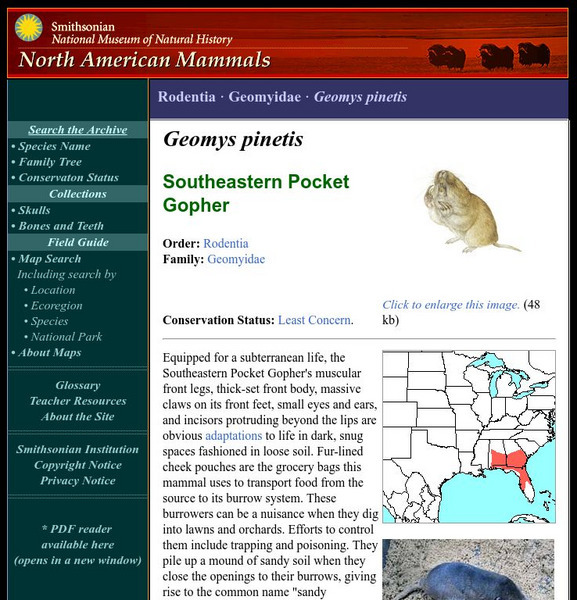
National Museum of Natural History: American Mammals: Southeastern Pocket Gopher
Equipped for a subterranean life, the Southeastern Pocket Gopher's muscular front legs, thick-set front body, massive claws on its front feet, small eyes and ears, and incisors protruding beyond the lips are obvious adaptations to life...
Smithsonian Institution
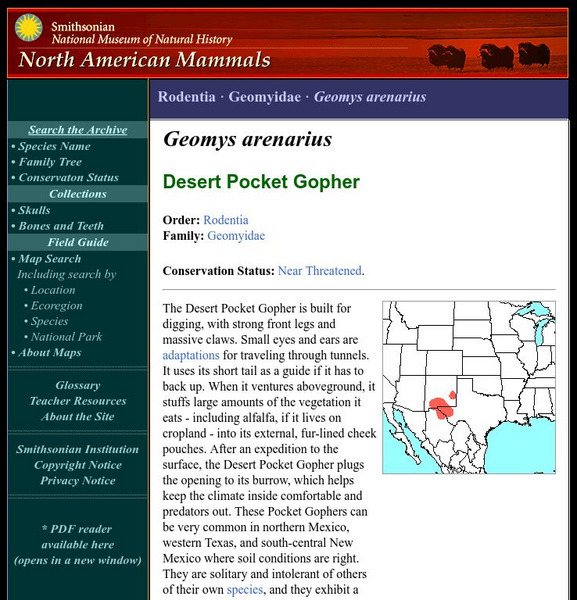
National Museum of Natural History: American Mammals: Desert Pocket Gopher
The Desert Pocket Gopher is built for digging, with strong front legs and massive claws. Small eyes and ears are adaptations for traveling through tunnels. Learn more about the Geomys arenarius, more commonly known as a Desert Pocket...
Smithsonian Institution
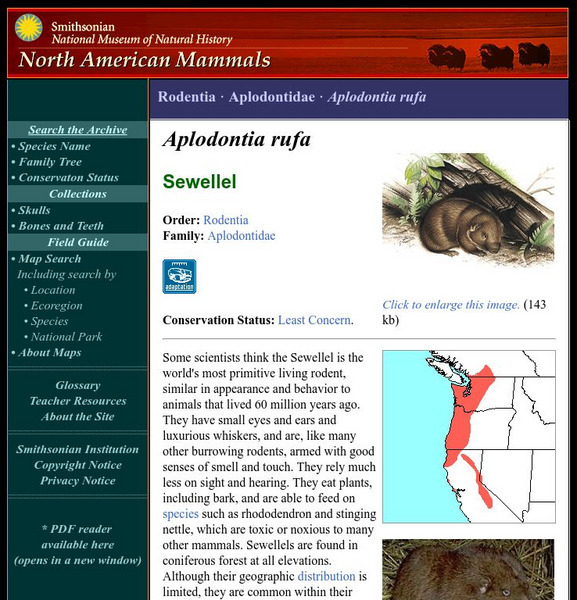
National Museum of Natural History: American Mammals: Mountain Beaver
Some scientists think the Mountain Beaver is the world's most primitive living rodent, similar in appearance and behavior to animals that lived 60 million years ago. They have small eyes and ears and luxurious whiskers, and are, like...

CPALMS
Cpalms: Reading With Our Eyes, Fingers, Toes, Ears and Nose
[Free Registration/Login Required] In this lesson, learners are learning to identify sensory words in their reading, specifically in poetry. Students will gain a perspective on how authors use sensory words to portray their ideas. They...

PBS
Pbs: Scientific American Frontiers: Artificial Alan
Provides an update on the primary areas of research in bioengineering and bionics: eyes, ears, liver, hands, skin, blood, cartilage, and tendons.

Curated OER
Kids Health: Conjunctivitis
This site from FamilyDoctor.org provides great information on conjunctivitis, or pinkeye. General information on the illness is given, along with facts about signs and symptoms of pinkeye. Links are provided throughout the article for...
TeachEngineering
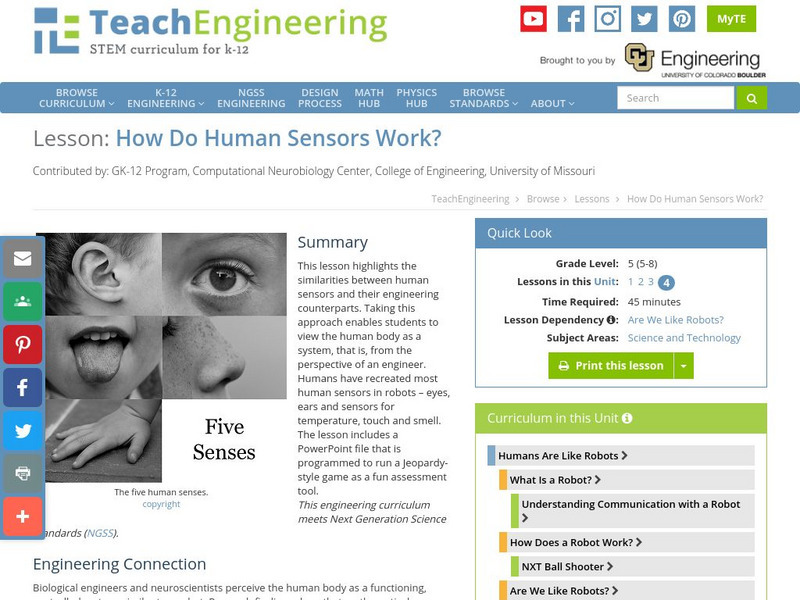
Teach Engineering: How Do Human Sensors Work?
This lesson highlights the similarities between human sensors and their engineering counterparts. Taking this approach enables students to view the human body as a system, that is, from the perspective of an engineer. Humans have...
Aaron Shepherd
Resthaven, an African Story (Reader's Theater)
This reader's theater version of a folktale from Africa has been adapted by children's book author Aaron Shepard from "The Ear, the Eye, and the Arm" by Nancy Farmer. For six or more players ages 12-15. Performance length is 10 minutes.

eSchool Today
E School Today: Your Revision Notes on the Five Senses
Learn how the sense organs are structured and how they function to provide you with five senses.

PBS
Pbs: The Clickable Croc
This informative site examines the role of the key parts of the crocodile. It specifically looks at the structure and function of the teeth, feet, tail, nostrils, skin, stomach, eyes, ears, and throat.
University of Washington
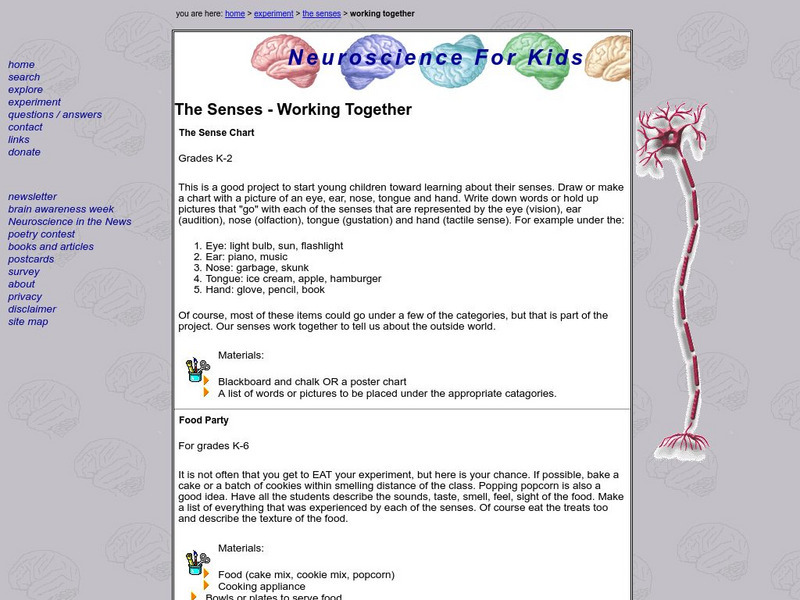
University of Washington: The Senses Working Together
This website is dedicated to the "Senses working together." Learn how to play the sensory concentration game at this website and create a sense chart.
Other
The Idiom Connection
Users can search this list of idioms and their explanations either alphabetically or by subject matter, such as Food Idioms, Business Idioms, or Animal Idioms. There are also quizzes on each category of idiom so students can test their...

Curated OER
Kids Health: My Body
For elementary school children, this page presents information about lungs, muscles, digestive system, teeth, skin, tongue, hair, heart, and more.
Other
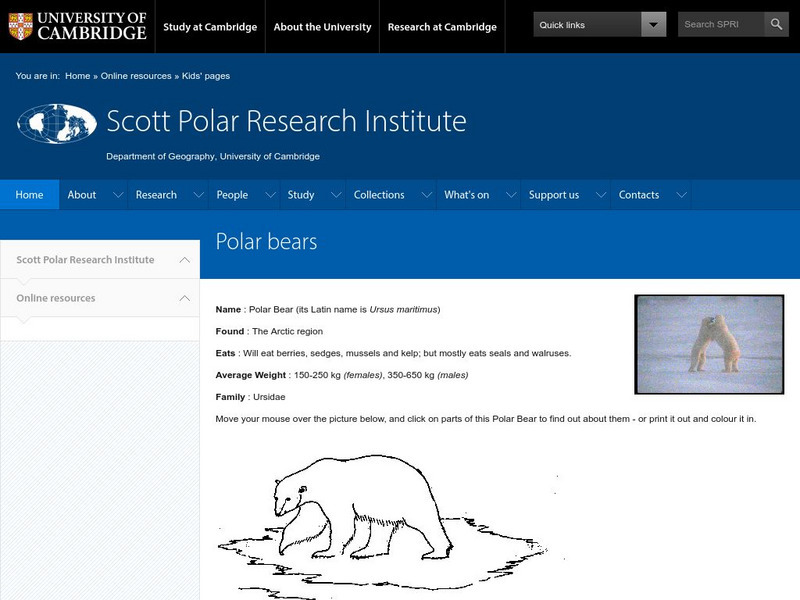
Scott Polar Research Institute: Polar Bears
Here you can learn about polar bears: where they live, what they eat, and what each part of their body is adapted for.

Lingolex
Lingolex.com: Learn Spanish: Physical Appearance
Parts of the body and other physical attributes in Spanish can be quickly learned with this fast and effective reference chart. Teacher's can make flash cards to enhance student participation.

US Department of Agriculture
Choose My Plate: All About the Vegetable Group
Learn about the vegetable group, including what foods are vegetables and how much of each type counts as a serving. Three broccoli spears counts as a cup of vegetables, as do one large ear of corn, and two large stalks of celery. What...

Curated OER
Kids Health: First Aid & Safety
This website includes several links that will help you learn first-aid skills that you might need to use in emergency situations. Learn how to deal with allergic reactions, animal bites, fevers, heat illness, nosebleeds, and other...
University of Washington
The Senses
This site has a collection of learning activities, games, experiments, and lesson plans on the five senses. Organized by grade level and topic, this site is packed with an assortment of interactive and engaging activities, that would...
Canadian Museum of Nature
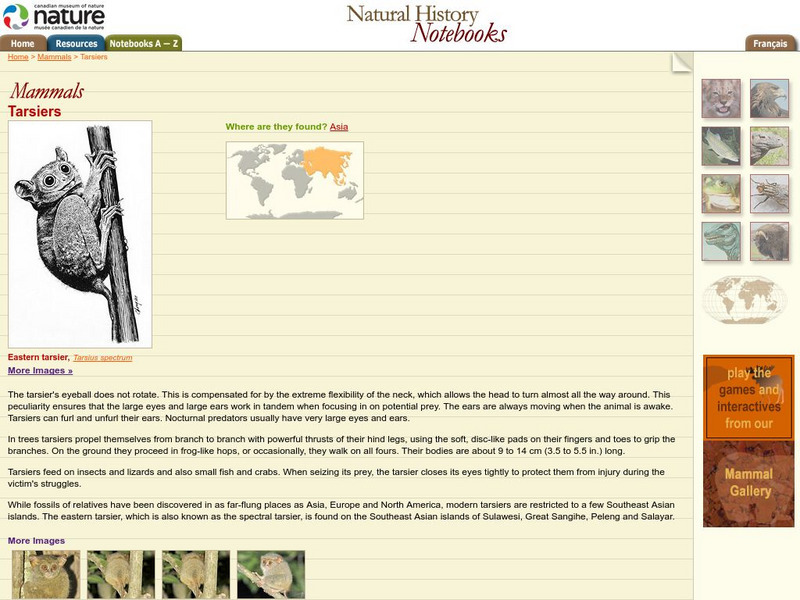
Canadian Museum of Nature: Tarsiers
The tarsier is a fascinating animal. Its eyes and neck coordinate to allow it to see well, and its ears can curl and uncurl. The tarsier is found in South East Asia. Details about its physical features and diet are given here.