Hi, what do you want to do?






Other
The Amazing World of Science With Mr. Green: Introduction to the Atmosphere
This teacher website provides a comprehensive lesson unit on the structure of Earth's atmosphere and how it sustains and impacts life on Earth and its ecosystems. Includes labeled diagrams, student worksheets, a slideshow, flashcards,...
University Corporation for Atmospheric Research
Ucar: Virtual Ballooning to Explore the Atmosphere Activity
In this computer-based virtual lab, students will learn about the layers of Earth's atmosphere by launching virtual balloons to collect temperature and pressure data at various altitudes. Given a limited number of balloon flights,...
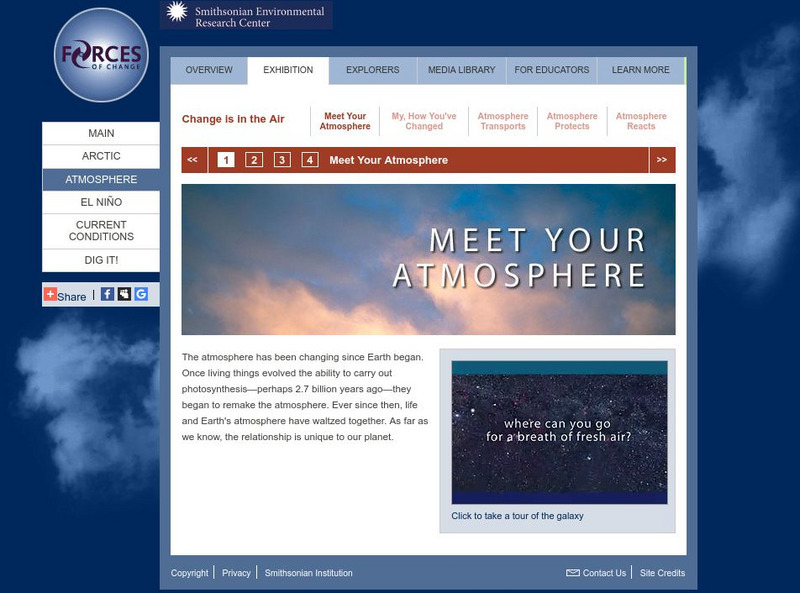
Smithsonian Institution
Smithsonian Environmental Research Center: Forces of Change:meet Your Atmosphere
This superb site has detailed information about the composition of the atmosphere, how it is always changing, how it protects life on earth, and the destructive impact human activity has on it. There is an atmosphere design lab, as well...
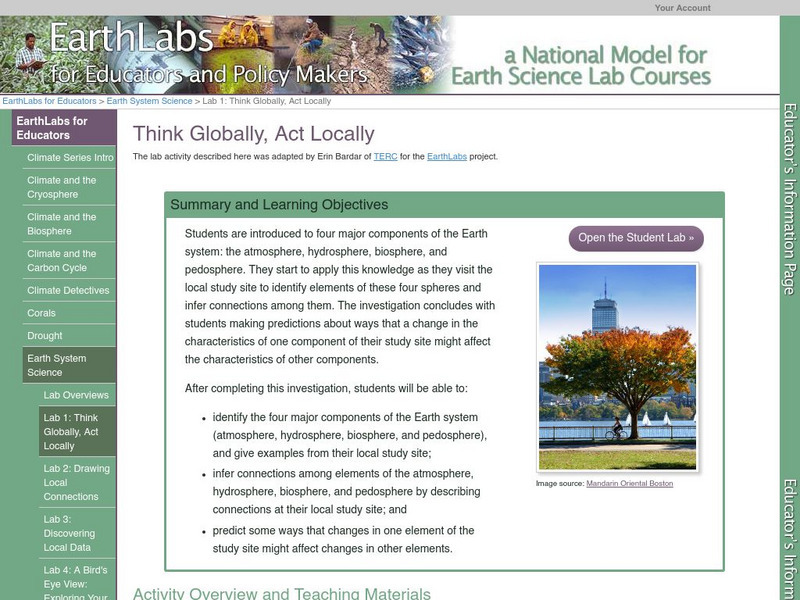
Science Education Resource Center at Carleton College
Serc: Lab 1: Think Globally: Act Locally
A lab experiment in a series of experiments that explores Earth Science Systems. This lab introduces students to the parts of the Earth system: the atmosphere, hydrosphere, biosphere, and pedosphere. As the students learn about the...
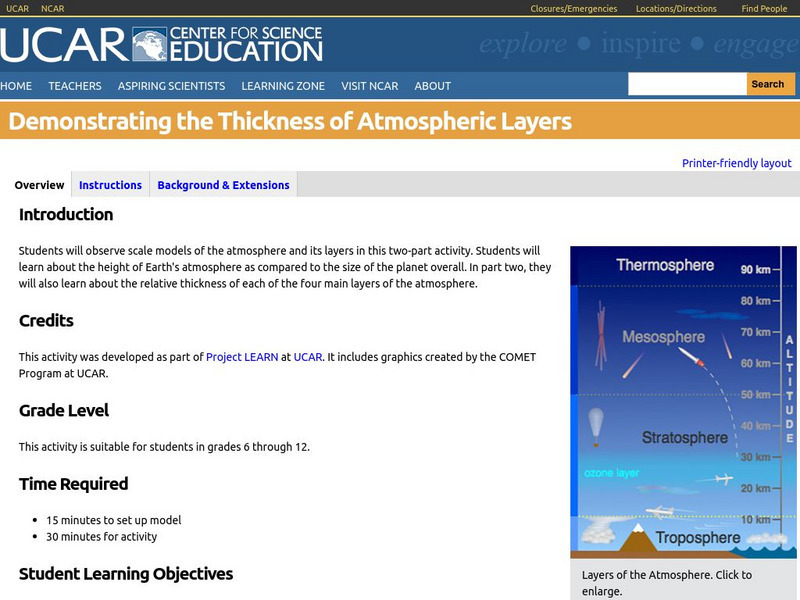
University Corporation for Atmospheric Research
Ucar: How High Does the Atmosphere Go?
This lesson shows the parts of the atmosphere and their size (thickness) relative to the size of the Earth. It includes background information, lesson outline, links to standards and assessments.
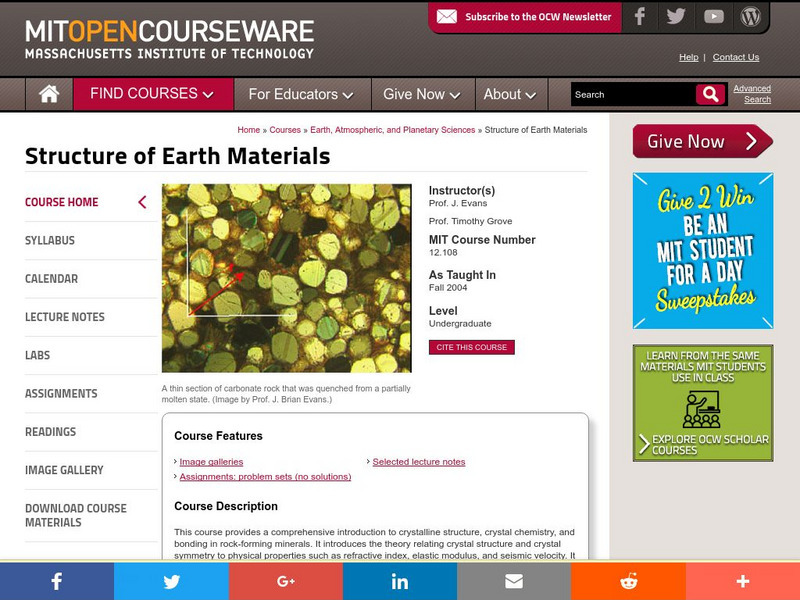
Massachusetts Institute of Technology
Mit: Open Course Ware: Structure of Earth Materials
A college course featuring mineral image galleries, labs, and instructor's notes on the topics of crystalline structure, crystal chemistry, and bonding in rock-forming minerals.
Physics Aviary
Physics Aviary: Deep Sea Diver Lab
Examine the factors affecting the pressure under a fluid. Run this simulation on "Earth-Like" planets with the same atmospheric pressure but different accelerations due to gravity.
University of Utah
University of Utah: Aspire: Atmosphere
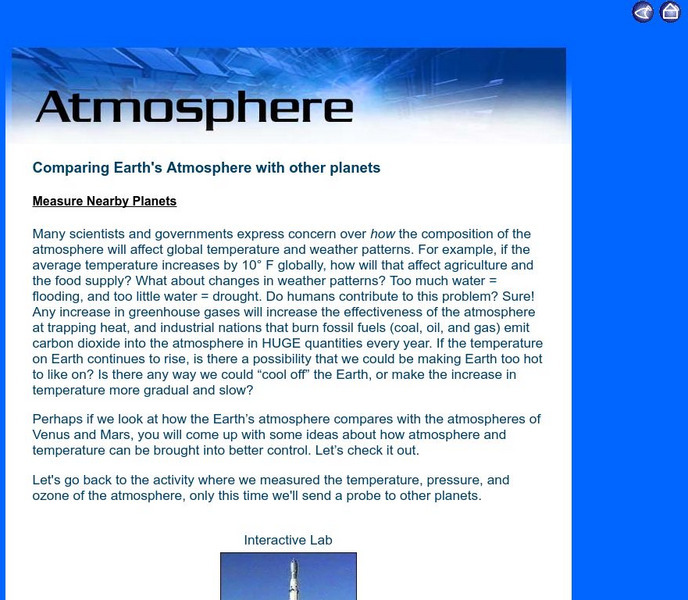
Read an informational text comparing the atmosphere of Earth and other planets and then answer six review questions. Check your answers when finished.

Massachusetts Institute of Technology
Mit: Open Course Ware: Petrology
A review, including notes and labs, of a Petrology course provided b MIT. Petrology is the study of the history and chemical make up of rocks.
Other
Lehigh University: Climate Change
An inquiry-based science unit for middle school students centered on weather and climate. The lessons integrate technology and lab activities while teaching about Earth system energy balance, greenhouse gases, paleoclimatology, and how...
Concord Consortium
Concord Consortium: Stem Resources: Radiant Energy Flow
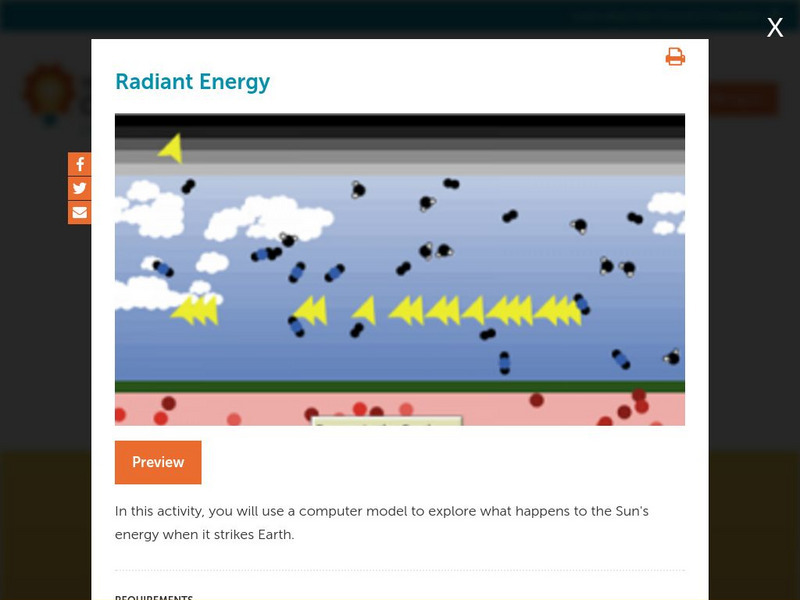
A virtual lab to look at the physical features of Earth that affect the amount of the Sun's energy that hits Earth. Students investigate how solar and infrared radiations enters and leaves the atmosphere with this model. Virtual lab...

National High Magnetic Field Laboratory
Magnet Academy: Anders Celsius
Anders Celsius is most familiar as the inventor of the temperature scale that bears his name. The Swedish astronomer, however, also is notable as the first person to make a connection between the radiant atmospheric phenomenon known as...
Math Science Nucleus
I. Science Ma Te: Integrating Science, Math and Technology
This site offers a wealth of online textbook-related materials that encourage the discovery of science in the world around us. Enter the site to access material on specific topics. Each section contains reading material (complete with...
Science and Mathematics Initiative for Learning Enhancement (SMILE)
Smile: Does Air Really Exist?
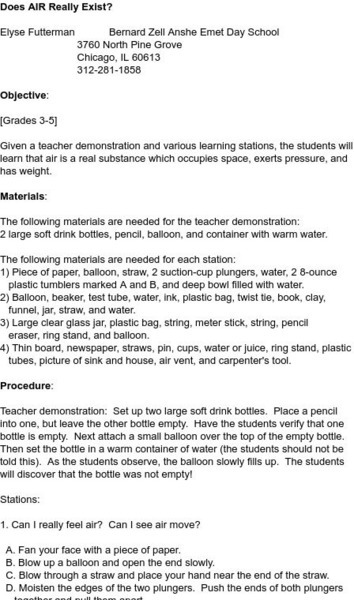
Given a teacher demonstration and various learning stations, the students learn that air is a real substance which occupies space, exerts pressure, and has weight.
Other
The Greenhouse Effect: Natural and Amplified Warming
This concise resource presents a thorough drawing which simplifies the explanation of the greenhouse effect into six easy to understand steps.