Hi, what do you want to do?





Henry J. Sage
Sage American History: Introduction to American Colonial History
Introductory article on American Colonial History in which the author takes a look at the first European settlers who made the voyage to America and addresses the essential question of who they were as people and hence, why they made...

Henry J. Sage
Sage American History: Native American Cultures: Pre History of America
Brief article about Native American culture and history prior to European settlement and with arrival of Europeans.
Henry J. Sage
Sage American History: The New Republic: The United States, 1789 1800
Article discussing the particular events of post-Revolutionary America, 1789-1800, and how they shaped the era of the New Republic. The author covers the first presidency, the emergent party system and foregin affairs.

Smithsonian Institution
National Museum of American History: Magic Lanterns, Magic Mirrors
Like fun house mirrors, motion pictures over the past one hundred years have reflected, challenged, influenced, and altered our visions of ourselves and the world in which we live. This virtual Exhibition was produced by the Photographic...
Other
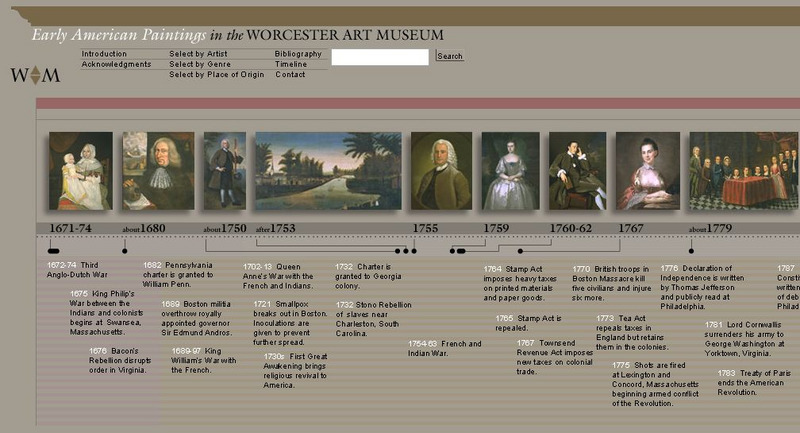
Early American Paintings in the Worcester Art Museum
A site with examples and information about early American paintings from 1671-1829. Use the timeline to click on a time period, or click and select by artist, genre, or place of origin. Also includes an extensive bibliography.
University of Groningen
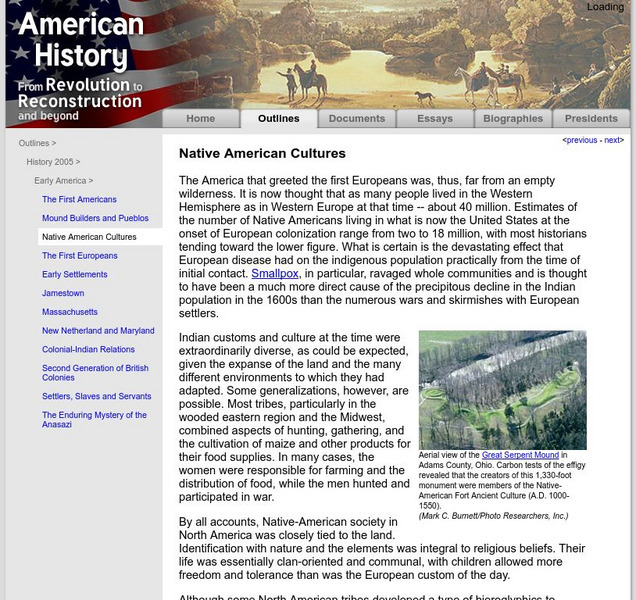
American History: Outlines: Native American Cultures
The America that greeted the first Europeans was, thus, far from an empty wilderness. It is now thought that as many people lived in the Western Hemisphere as in Western Europe at that time -- about 40 million. Estimates of the number of...
Henry J. Sage
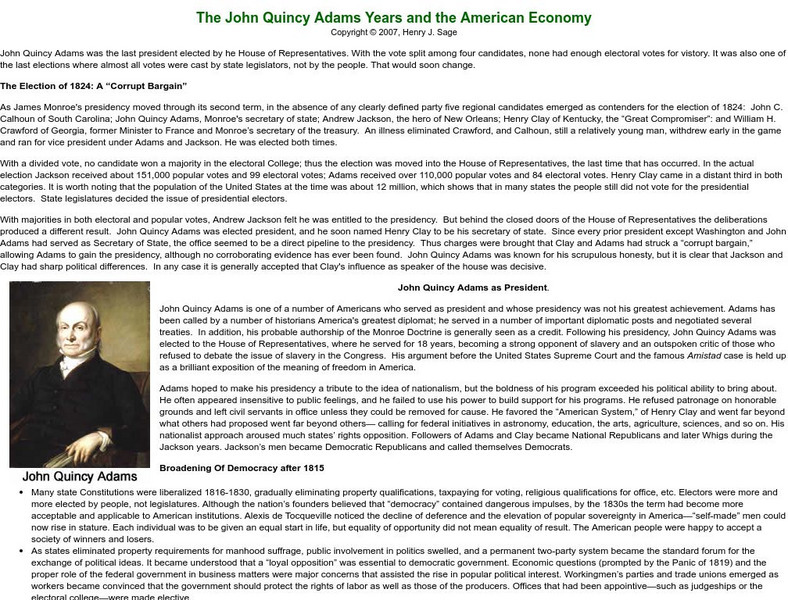
Sage American History: American Economic Growth 1820 1860
Article outlines the boom in early American economic growth as a result of Northern industry in manufacturing, steam power, transportation and the role of government between 1820 and 1860.
Smithsonian Institution
Smithsonian Source: Resources for Teaching American History: Primary Sources
A varied collection of primary resources from American history. They include portraits, banknotes, artifacts, newspaper items, paintings, and illustrations.
Henry J. Sage
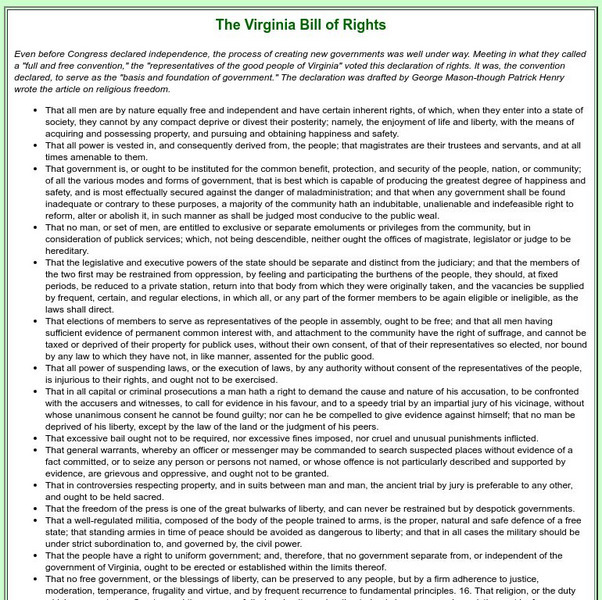
Sage American History: The Virginia Bill of Rights
Primary source document establishing a basis and foundation of early American government. This document, adopted in Virginia and drafted by George Mason and Patrick Henry, precedes the Congressional call for independence.
Lumen Learning
Lumen: A Short History of the Early American Novel
This article is a brief history of the Early American novel with citations.

University of Groningen
American History: Outlines: Early American and Colonial Period to 1776
Background information about the literary traditions of the pre-Colonial and Colonial period. Includes information about Native American oral traditions and Native American cultures. Follow the links to the Early American era and to...
Henry J. Sage
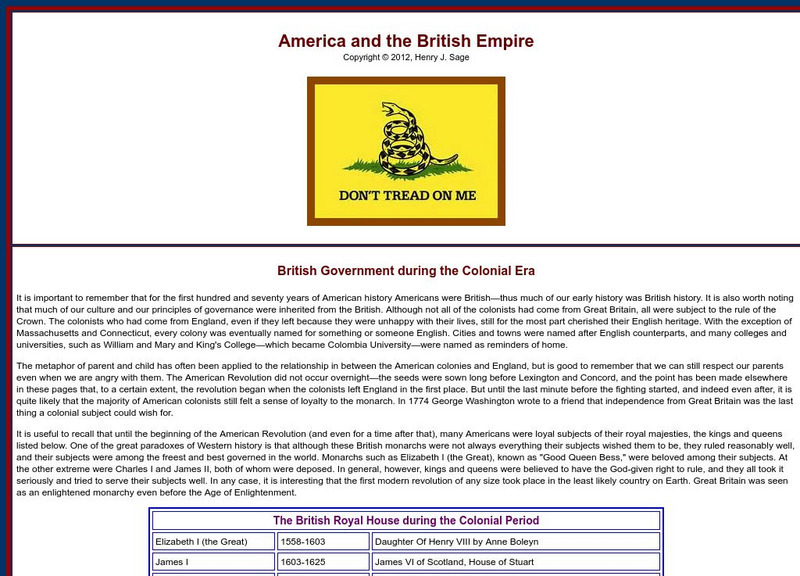
Sage American History: America and the British Empire
Article illustrating the connection between America and the British Empire. The author points out that much of early American history is part of British history. Outlines British history since 1066.
Encyclopedia Britannica
Encyclopedia Britannica: Women in American History
At this site from Encyclopedia Brittanica, Inc. you can follow brave-hearted women through a timeline of unbelievable "Herstory." Impressive site tracks the unsinkable American woman from Early American adventurers like Sacagawea and...
National Women’s History Museum
National Women's History Museum: Pocahontas
Among the most famous women in early American history, Pocahontas is credited with helping the struggling English settlers survive.
National Endowment for the Humanities
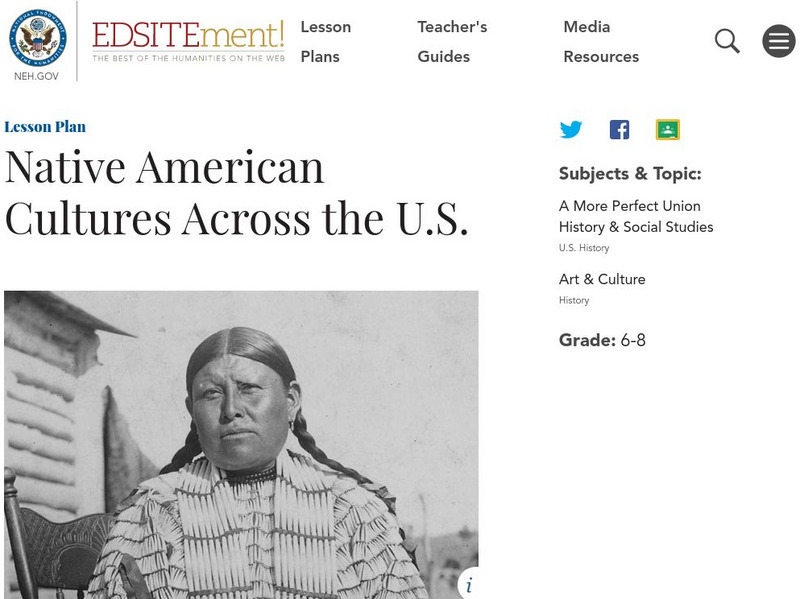
Neh: Edsit Ement: Native American Cultures Across the United States
Young scholars explore different aspects of the cultures of the First Americans in this lesson plan. Stereotypes are often associated with Native Americans through movies and in the context of the Thanksgiving holiday. Specific...
University of Groningen
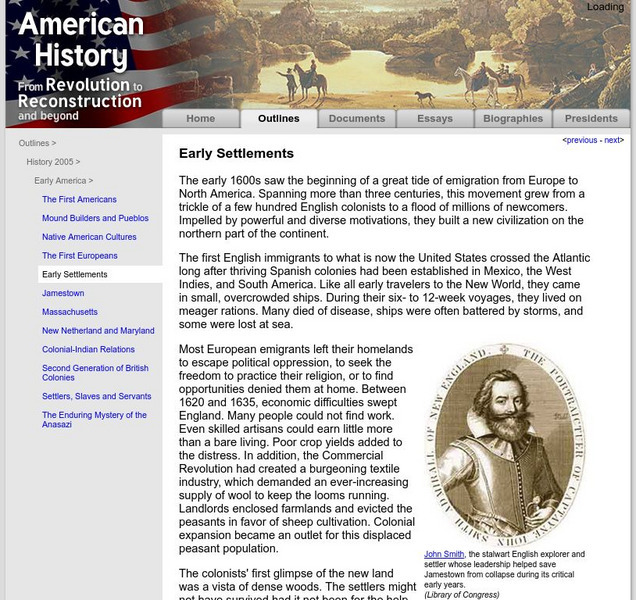
American History: Outlines: Early Settlements
The early 1600s saw the beginning of a great tide of emigration from Europe to North America. Spanning more than three centuries, this movement grew from a trickle of a few hundred English colonists to a flood of millions of newcomers....
University of Groningen
American History: Outlines: New Netherland and Maryland
Hired by the Dutch East India Company, Henry Hudson in 1609 explored the area around what is now New York City and the river that bears his name, to a point probably north of present-day Albany, New York. Subsequent Dutch voyages laid...
National Endowment for the Humanities
Neh: Edsit Ement: Eyewitness to History (Lesson Plan)
Understanding the important events in United States history and being able to recognize how history affects current events are crucial skills for students. This lesson plan lets them examine and analyze important milestones through...
University of Groningen
American History: Outlines: Mound Builders and Pueblos
The first Native-American group to build mounds in what is now the United States often are called the Adenans. They began constructing earthen burial sites and fortifications around 600 B.C. Some mounds from that era are in the shape of...
University of Groningen
American History: Outlines: Colonial Indian Relations
By 1640 the British had solid colonies established along the New England coast and the Chesapeake Bay. In between were the Dutch and the tiny Swedish community. To the west were the original Americans, then called Indians.

University of Groningen
American History: Outlines: Second Generation of British Colonies
The religious and civil conflict in England in the mid-17th century limited immigration, as well as the attention the mother country paid the fledgling American colonies.
University of Groningen
American History: Outlines: The Enduring Mystery of the Anasazi
Time-worn pueblos and dramatic cliff towns, set amid the stark, rugged mesas and canyons of Colorado and New Mexico, mark the settlements of some of the earliest inhabitants of North America, the Anasazi (a Navajo word meaning "ancient...
University of California
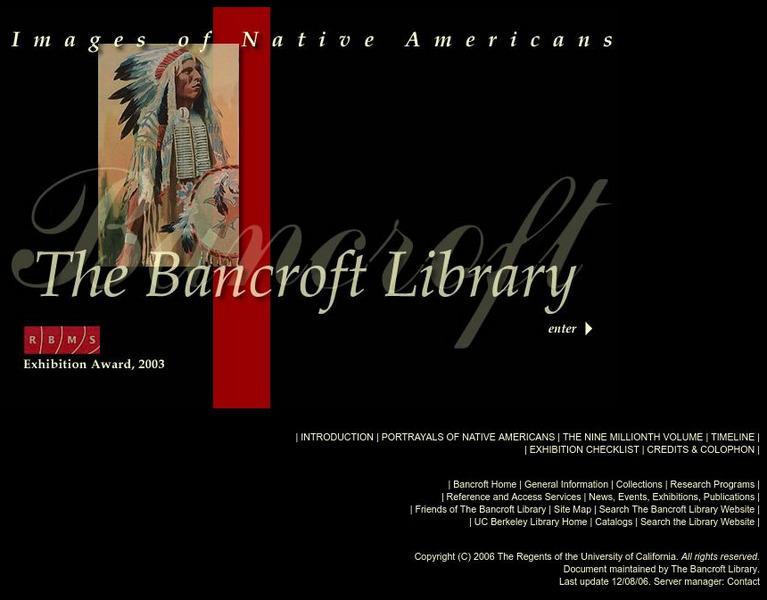
The Bancroft Library: Images of Native Americans
These artworks are visual interpretations of Native Americans through the eyes of American settlers. Follow a timeline from 1500-1900 to see the perceptions of Native Americans of the white settlers at that time.
Smithsonian Institution
National Museum of American History: Building a Sod House
Ready to be an early settler on the plains? While playing this interactive game, you'll get to build your own sod house ..if ..you have the right answers.