Hi, what do you want to do?






Wisc-Online
Wisc Online: A Typical Animal Cell
Colorful, interactive image of an animal cell provides solid definitions of cell parts as the learner scrolls over each portion of the image or parts list. A short quiz follows the initial image to assess the learner's knowledge of cell...
Read Works
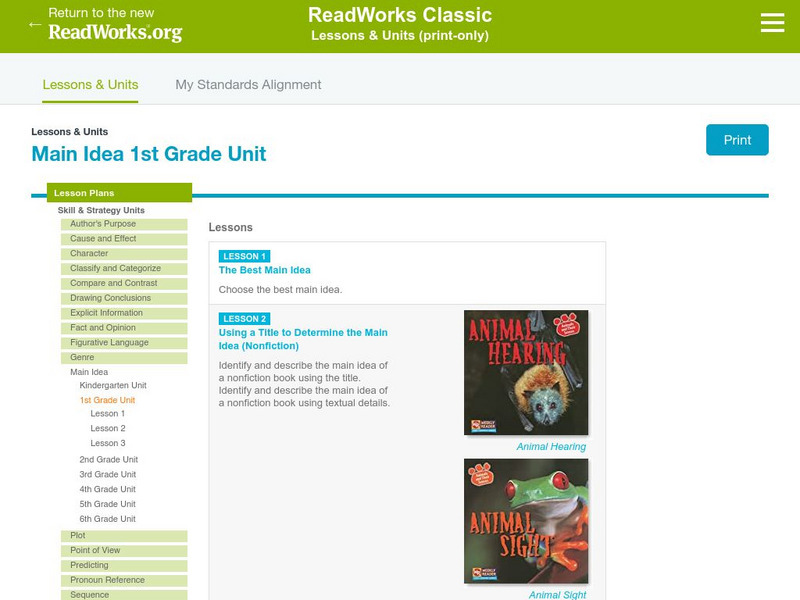
Read Works: Main Idea 1st Grade Unit
[Free Registration/Login Required] Students learn to use titles and supporting details in both fiction and non-fiction texts in order to identify the main idea of the book in this three-lesson plan unit. The lessons utilize the books...

George Eastman Museum
Animation: Illusion of Motion
Check out these moving picture devices that came before the cinema. Includes instructions on how to make your own.
Physics Classroom
The Physics Classroom: Refraction and Ray Model of Light: Refraction and Sight
Through illustrated diagrams and animations, students explore the broken pencil phenomenon and light refraction.
Other
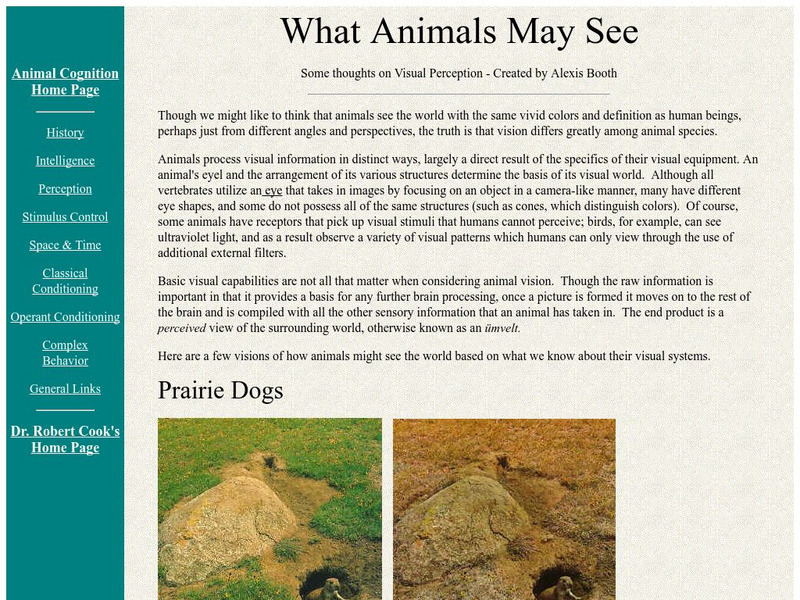
Comparative Cognition Lab: What Animals May See
Animals process visual information in distinct ways and vision differs greatly among animal species. Take a look at what what different species of animals may see compared to what we as humans see.
PBS
Pbs: Link O Vision
Use animal characteristics to link animals to each other. This engaging game from PBSkids will captivate students. Just click on the t.v. until you think you have a match.

Vision Learning
Vision Learning: Three States of Matter
Concept animation compares molecular movement of solids, liquids, and gases.
Other
Lens Shopper: Anatomy of the Eye
Learn about the human body's own "camera" as you explore the inner workings of the human eye. This resource is displayed as a three-dimensional, interactive animation.
PBS
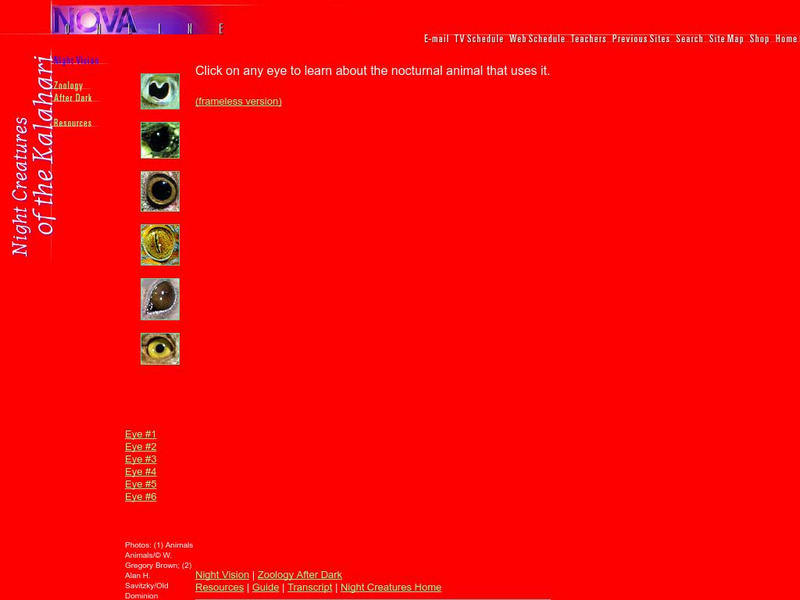
Pbs: Night Creatures of the Kalahari: Night Vision
Click on the eye and learn about the nocturnal animal it belongs to. Animals include cuttlefish, pit-viper, tarsier, flying gecko, fruit bat and the owl.
The Tech Interactive
Tech Museum of Innovation: Do Animals See Color?
Part of a larger site on sight and the function of the eyeball, this section seeks to answer the question, can animals see color? The discussion centers around the use of cones in the area of sight.
PBS
Pbs Learning Media: Life Science for Grade 4 With Wild Kratts
This unit uses Wild Kratt videos, hands-on activities, and document resources to teach about animal senses. Extensions for further learning are also provided.
San Diego Zoo Global
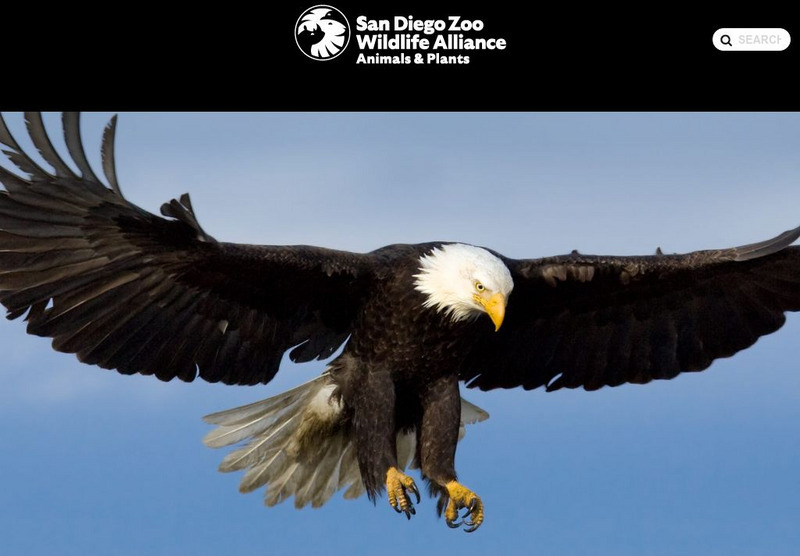
San Diego Zoo: Bald Eagle
This resource presents a complete fact sheet on bald eagles that includes a look at why bald eagles are "bald," what bald eagles eat, how their vision works, their courtship and mating behavior, their nesting and reproductive behaviors,...
Physics Classroom
The Physics Classroom: Refraction and the Ray Model of Light
Six complete lessons on refraction and the ray model of light. Tutorials include informational text, interactive activities, animations, and quick, interactive comprehension checks along the way.
Georgia Department of Education
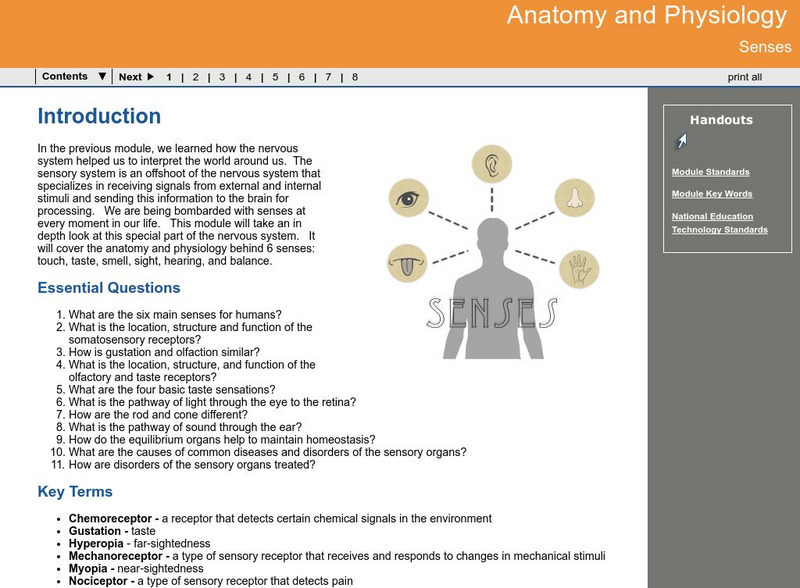
Ga Virtual Learning: Anatomy and Physiology: Senses
Through informational text with printable notes, animations, video clips, and practice problems students discover the function of the sensory structures in the human body.
Physics Classroom
The Physics Classroom: Reflection and the Ray Model of Light
A four-lesson tutorial on the reflection and the ray model of light. These complete tutorials include informational text, interactive activities, animations, and quick, interactive comprehension questions.
CK-12 Foundation
Ck 12: Life Science: 8.7 Communication
Learn about the many forms of animal communication.
University of New South Wales (Australia)
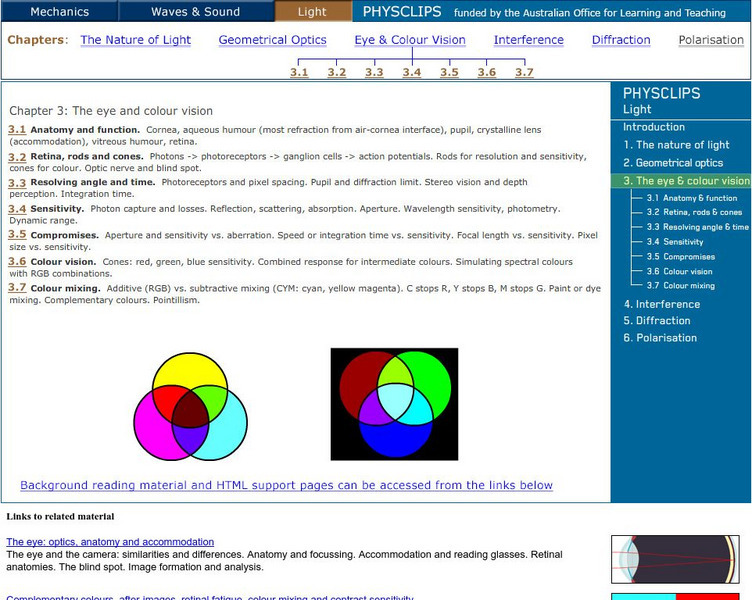
University of New South Wales: Physclips: The Eye and Color Vision
Learn about the eye and how it processes color in this learning module.
Other
Do something.org
Do Something is a nationwide network of young people who know they can make a difference in their communities and take action to change the world around them. As part of Do Something, young people are asked what they want to do to make...
Physics Classroom
The Physics Classroom: Reflection and Ray Model of Light: Why an Image Is Formed
This illustrated physics tutorial uses animations to attempt to explain to students why images appear.

PBS
Pbs: Who Made America?: Innovators: Walt Disney
One-page profile of influential innovator, Walt Disney, a cartoonist whose vision and ideas created an entertainment empire that includes Disneyland and animated movies.
Discovery Education
Discovery Education: The Eye: Structure and Function
In this lesson, students learn about the structure and function of the human eye and research how it compares to animal eyes. They will then choose an eye, write a description, and make an illustration of it, which other students will...
Other
University of Edinburgh: Glossary of Introductory Computer Graphics Terms
This website, from the University of Edinburgh, provides a lengthy glossary of computer graphics terms written by Olin Lathrop, author of "The Way Computer Graphics Work". This site provides simple definitions of basic terms; no graphics...
Other
Young People's Trust for the Environment: Communication in Animals
Facts about the many ways animals communicate. Included is information about scent, sound, sight, and touch.
Other
National Museum of Wildlife Art: Artist Biography: Ernest Thompson Seton
Detailed biography of naturalist, artist, and writer Ernest Thompson Seton. Includes two examples of his drawn animal studies.